Loading Events

« All Events

  • This event has passed.

Orchestra of St. Luke’s & Garrick Ohlsson, piano

Sunday August 3, 2025 at 4:00pm

Buy Tickets Add To Calendar

Overview

Sunday August 3, 2025 at 4:00pm

As the summer draws to a close, don’t miss the grand finale of our 80th season with Musical America’s 2022 Conductor of the Year Teddy Abrams, celebrated for his vibrant energy and electrifying performances. Maestro Abrams will lead the Orchestra of St. Luke’s in a captivating program featuring the incomparable pianist Garrick Ohlsson, who will bring to life one of Beethoven’s most powerful and poetic piano concertos. Join us to bid farewell to summer in spectacular style! 

3:00pm / Pre-concert conversation with Teddy Abrams

“Maestro of the People … breaking the mold of modern conductors.”
The New York Times on Teddy Abrams 


Artists

Orchestra of St. Luke’s
Teddy Abrams, conductor  
Garrick Ohlsson, piano 

Program

Caroline Shaw: Entr’acte 
Ludwig van Beethoven: Piano Concerto No. 1 in C Major, Op. 15 

Intermission


Johannes Brahms: Symphony No. 1 in C Minor, Op. 68

About the Music

CAROLINE SHAW

Entr’acte 

Composer, violinist, vocalist, and producer Caroline Shaw became the youngest recipient of the Pulitzer Prize for Music in 2013 with her groundbreaking Partita for 8 Voices. Today, Shaw is a sought-after composer/performer in multiple genres, including classical music, film and television scores, and contemporary popular music. She has received numerous awards, including several Grammys, and her work has been performed by leading musicians and ensembles around the world.

Shaw’s compositions defy the common belief that contemporary music is by definition obscure, esoteric, or comprehensible only to musical cognoscenti. Instead, Shaw creates music that appeals to audiences of all ages and backgrounds, with its fresh approach to established forms, accessible sounds, and moments of pure joy. 

Shaw writes, “Entr’acte was written in 2011 [while Shaw was a graduate student at Princeton University] after hearing the Brentano Quartet play Haydn’s Op. 77 No. 2 – with their spare and soulful shift to the D-flat major trio in the minuet. It is structured like a minuet and trio, riffing on that classical form but taking it a little further. I love the way some music (like the minuets of Op. 77) suddenly takes you to the other side of Alice’s looking glass, in a kind of absurd, subtle, technicolor transition.”

Although it is now often performed by string orchestras, Entr’acte was originally composed for string quartets, and specifically for string quartets with no prior experience playing new music. Entr’acte’s straightforward, expressive themes appeal to players and audiences alike and the piece has become popular with young ensembles. “People say [Entr’acte] is like a gateway drug for new music,” Shaw says jokingly.

Entr’acte begins simply, with a catchy repeated rhythmic motif. Shaw juxtaposes the Minuet’s signature ¾ rhythm with the less regulated, improvisatory quality of the Trio. When she composed Entr’acte, Shaw wanted the players to collaborate in the way the music unfolds; to this end, she provides detailed instructions in the score regarding how to execute certain passages. In the Trio, for example, the cellist’s part includes the following directions: “Notes with fall-off gesture are basically that. Slide down from the written pitch (which does not have to be absolutely exact, except where tenutos are marked), maybe a half or whole step, with a slight coming away. Like a little sigh.”

Ludwig van Beethoven

Piano Concerto No. 1 in C Major, Op.15

Ludwig van Beethoven’s Piano Concerto No. 1 is a musical portrait of the composer in his 20s: a self-confident young man on his way to becoming the most sought-after musician in Vienna. As the 19th century dawned, Beethoven’s reputation rested on his skill as an excellent pianist who played for the most select audiences. Beethoven’s virtuosity also brought him many pupils, and his connections among the aristocracy and other important leaders in Vienna assured him entry into the most desirable strata of society. At this point in his life, Beethoven had had yet to make an indelible name for himself as a composer, and he bore little resemblance to the Romantic persona – deaf, iconoclastic, temperamental, and disheveled – most familiar to today’s audiences.

Despite its numeric designation, Beethoven’s C major piano concerto is not the first concerto he wrote, but the third, and was composed after the Piano Concerto in B-flat, known as No. 2; Beethoven caused this discrepancy in the numbering by publishing the B-flat concerto before the C major. Nonetheless, the C major concerto is clearly the more mature work; its overall substance and the rhythmic energy of its final movement reveal Beethoven’s emerging musical personality. 

The Allegro con brio is confidently assertive, buoyed by trumpets and timpani. Humor characterizes the Rondo, whose rhythmic energy borders on rowdiness.

Of particular note are the two completed cadenzas Beethoven wrote for this movement, as well as an unfinished third. When performing the concerto himself, Beethoven improvised the cadenzas; the written versions were committed to paper some years after the concerto’s premiere. 

Beethoven’s 1798 performance of his Piano Concerto No. 1 in Prague moved a fellow composer, Johann Tomášek, who remarked, “Beethoven’s grand style of playing, and especially his bold improvisation, stirred me strangely to the depths of my soul; indeed, I found myself so profoundly shaken that I did not touch my piano for several days.”

Johannes Brahms 

Symphony No. 1 in C Minor, Op. 68

“There are fewer things heavier than the burden of a great potential.” 
– Linus van Pelt, Peanuts

In 1853, Robert Schumann wrote a laudatory article about an unknown 20-year-old composer from Hamburg named Johannes Brahms, whom, Schumann declared, was the heir to Beethoven’s musical legacy. Schumann wrote, “If [Brahms] directs his magic wand where the massed power in chorus and orchestra might lend him their strength, we can look forward to even more wondrous glimpses into the secret world of the spirits.” At the time Schumann’s piece was published, Brahms had composed several chamber pieces and works for piano, but nothing for orchestra. Schumann’s article brought Brahms to the attention of the musical world, while at the same time dropping a crushing weight of expectation onto the young man’s shoulders. “I shall never write a symphony! You have no idea how it feels to hear behind you the tramp of a giant like Beethoven,” Brahms grumbled.

Brahms took almost 20 years to complete the Symphony No. 1. It is commonly supposed that Brahms was intimidated by the idea of writing a symphony worthy of the Beethovenian ideal (he was), and this fear kept him from finishing the symphony more quickly. However, this theory, on its own, does him a disservice. Brahms wanted to take his time, a reflection of the serious regard he felt for the symphony as a genre. “Writing a symphony is no laughing matter,” he remarked. 

Brahms began composing the first movement when he was 23, but recognized he was handicapped by his lack of experience writing for orchestra. Over the next 19 years, as he continued working on Symphony No. 1, Brahms wrote several other orchestral works, including his groundbreaking German Requiem and Variations on a Theme of Haydn. The enthusiastic response to both works bolstered Brahms’ confidence in his ability to write effectively for orchestra. 

In 1872, Brahms was offered the conductor’s post at Vienna’s Gesellschaft der Musikfreunde (Society of Friends of Music). This position gave Brahms an invaluable first-hand understanding of how the different sections of an orchestra interact. 23 years after Schumann’s article first appeared, Brahms premiered his Symphony No. 1 in C minor. It was worth the wait.

Brahms’ friend and critic, Eduard Hanslick, summed up the feelings of many: “Seldom, if ever, has the entire musical world awaited a composer’s first symphony with such tense anticipation … The new symphony is so earnest and complex, so utterly unconcerned with common effects, that it hardly lends itself to quick understanding … [but] even the layman will immediately recognize it as one of the most distinctive and magnificent works of the symphonic literature.”

Hanslick’s reference to the symphony’s complexity was a polite way of saying the music was too serious to appeal to the average listener, but Brahms was unconcerned. Uninterested in wooing the public with pretty sounds, Brahms declared, “My symphony is long and not exactly lovable.” 

The symphony is carefully crafted; one can hear Brahms’ compositional thought processes throughout, especially his decision to incorporate several overt references to Beethoven. The moody, portentous atmosphere of the first movement, the short thematic fragments from which Brahms spins out seemingly endless developments, are all hallmarks of Beethoven’s style, as is the choice of C minor, a key closely associated with several of Beethoven’s major works, including the Symphony No. 5, the Egmont Overture and the Piano Concerto No. 3. And yet, despite all these deliberate references to Beethoven, this symphony is not, as conductor Hans von Bülow dubbed it, “Beethoven’s Tenth.” The voice is distinctly Brahms’, especially in the inner movements.

The tender, wistful Andante sostenuto contrasts the brooding power of the opening movement. Brahms weaves a series of dialogues among different sections of the orchestra, and concludes with a duet for solo violin and horn. In the Allegretto Brahms slows down Beethoven’s frantic scherzo tempos. The pace is relaxed, easy, featuring lilting themes for strings and woodwinds. In the finale, a strong, confident horn proclaims Brahms’ victory over the symphonic demons that beset him. Here Brahms also pays his most direct homage to Beethoven, with a majestic theme, first heard in the strings, that closely resembles the “Ode to Joy” melody from Beethoven’s Ninth Symphony. When a listener remarked on this similarity, Brahms, never one to suffer fools, snapped irritably, “Any jackass could see that!”

© Elizabeth Schwartz. All rights reserved.

Elizabeth Schwartz is a musician and music historian based in Portland, OR. She has been a program annotator for more than 25 years, and provides notes to musicians, ensembles, and music festivals around the world. Schwartz has also contributed to NPR’s “Performance Today,” (now heard on American Public Media).

classicalmusicprogramnotes.com

About the Artists

Garrick Ohlsson, piano

Since his triumph as winner of the 1970 Chopin International Piano Competition, pianist Garrick Ohlsson has established himself worldwide as a musician of magisterial interpretive and technical prowess. Although long regarded as one of the world’s leading exponents of the music of Frederic Chopin, Mr. Ohlsson commands an enormous repertoire which ranges over the entire piano literature ecompassing more than 80 concerti. 

With Orpheus Chamber Orchestra Ohlsson returns to Carnegie Hall in the fall and throughout the 2024-25 season can be heard with orchestras in Portland, Madison, Kalamazoo, Palm Beach and Ft. Worth. In recital programs including works from Beethoven, Schubert, Chopin to Barber and Scriabin he will appear in Santa Barbara, Orange County, Aspen, Warsaw and London. 

Collaborations with the Cleveland, Emerson, Tokyo and Takacs string quartets have led to decades of touring and recordings. His solo recordings are available on British label Hyperion and in the US on Bridge Records. Both Brahms concerti and Tschaikovsky’s Second piano concerto have been released on live recordings with the Melbourne and Symphony symphonies on their own labels and Rachmaninoff Concerto No. 3 with the Atlanta Symphony and Robert Spano. 

A native of White Plains, N.Y., Garrick Ohlsson began piano studies at the age of eight at the Westchester Conservatory of Music and at 13 he entered the Juilliard School in New York City. He was awarded the Avery Fisher Prize in 1994 and the University Musical Society Distinguished Artist Award in Ann Arbor, MI in 1998. He is the 2014 recipient of the Jean Gimbel Lane Prize in Piano Performance from the Northwestern University Bienen School of Music and in August 2018 the Polish Deputy Culture Minister awarded him with the Gloria Artis Gold Medal for cultural merit. He is a Steinway Artist and makes his home in San Francisco. 

Teddy Abrams, conductor

Teddy Abrams, Grammy Award winner and Musical America’s 2022 Conductor of the Year, has been the galvanizing force behind the Louisville Orchestra (LO)’s artistic renewal since his appointment as Music Director in September 2014. 

Following summer performances across Kentucky of the “In Harmony” tour – a multi-season initiative funded by the Commonwealth that takes the orchestra to every corner of the state – Abrams and the LO begin their 2024–25 season with Carl Orff’s Carmina Burana with the Louisville Chamber Choir, followed by Ray Chen performing Samuel Barber’s Violin Concerto, debut works from members of the 2024–25 Creators Corps, Valerie Coleman’s Concerto for Orchestra, and a staged production of Viktor Ullmann’s one-act chamber opera Der Kaiser Von Atlantis. Abrams also continues to be in high demand as a guest conductor, making his conducting debut this season with the Boston Symphony Orchestra, and returning to the Los Angeles Philharmonic, where he will be joined by pianist Jean-Yves Thibaudet, as well as the National Symphony Orchestra, Luxembourg Philharmonic, and Curtis Symphony Orchestra. 

In April 2023, Abrams premiered his own composition Mammoth with the LO and Yo-Yo Ma in Kentucky’s Mammoth Cave, and in 2024 his piano concerto for Yuja Wang won a Grammy Award. Abrams is now at work on ALI, a musical about Muhammad Ali; and—as part of the Emerson Collective Fellowship—an orchestral work that tells the story of the state of Kentucky, to premiere in the 2025–26 season. 

Orchestra of St. Luke’s

Orchestra of St. Luke’s (OSL) performs and produces in a variety of formats throughout New York City, including orchestral and chamber music series on each of Carnegie Hall’s iconic stages, programs focused on contemporary composers presented throughout the five boroughs, collaborations with Paul Taylor Dance Company at Lincoln Center, a composition institute, and much more. Many of OSL’s performances are presented for free through its education and community engagement programs, reaching over 12,000 students and families annually with accessible, interactive student concerts, a thriving youth orchestra, and mentorship programs for emerging players. OSL built and operates The DiMenna Center in midtown Manhattan — the city’s only rehearsal, recording, and performance space built specially for classical music — where it hosts thousands of musicians and audience members year-round.

For more information and where they are playing next, please visit their website.


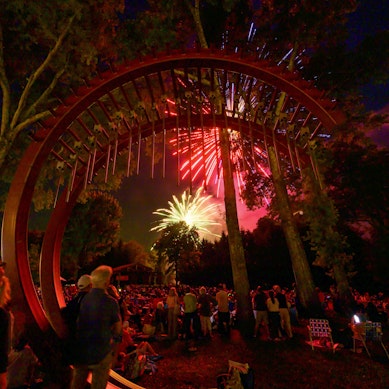
Garden Listening / For those who prefer a more casual concert environment, Garden Listening tickets are $20, and are free for Members and children under 18 years old. Enjoy a picnic, admire a starry sky, or relax with the family. Please Note! This ticket option has no view of the stage or access to the theater. The concert will be broadcast onto Friends Field with audio only. We ask that you bring your own seating for Garden Listening. If you like this seating option, check out all of the summer concerts that have Garden Listening.


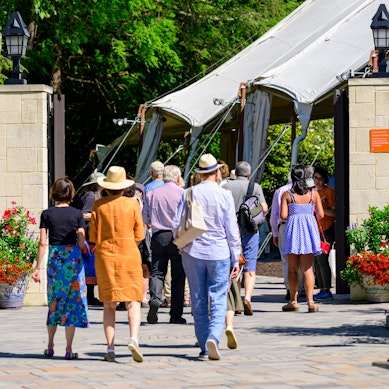
    Summer Season Shuttle / Take the FREE shuttle from Metro North’s Katonah train station to and from Caramoor! The shuttle runs before and after every summer afternoon and evening concert. There is no RSVP to get on the shuttle, it will be there when you arrive (in the parking lot side of the station). If it’s not there, it’s just making the loop and should be back within 5–10 minutes. The shuttle will start running 2.5 hours before the concert, and 30 minutes after the concert ends.

Rain or Shine / All events at Caramoor take place rain or shine. However, this performance is under our fully covered Venetian Theater tent.

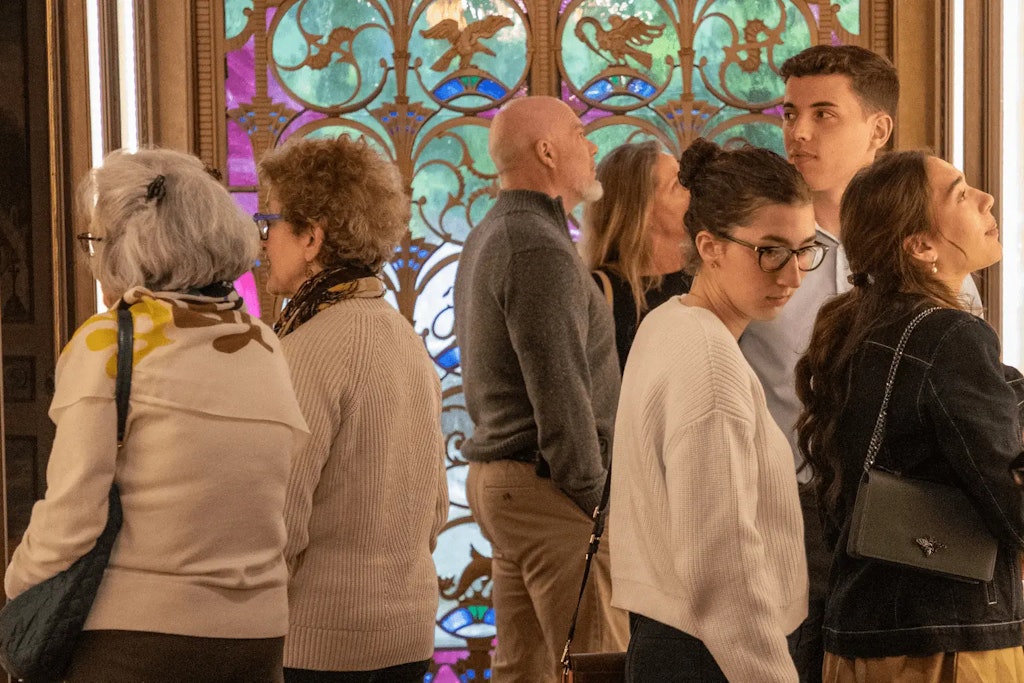
Explore the Rosen House from 2:00pm–3:30pm / Select rooms of the Rosen House are free to explore during our Open House hours. No RSVP is required; feel free to attend and discover more about Caramoor’s history and founders.

Caramoor is proud to be a grantee of ArtsWestchester with funding made possible by Westchester County government with the support of County Executive Ken Jenkins.
All concerts made possible by the New York State Council on the Arts with the support of the Office of the Governor and the New York State Legislature.