Loading Events

« All Events

  • This event has passed.

Escher String Quartet & Alessio Bax, piano

Sunday July 6, 2025 at 4:00pm

Buy Tickets Add To Calendar

Overview

Sunday July 6, 2025 at 4:00pm

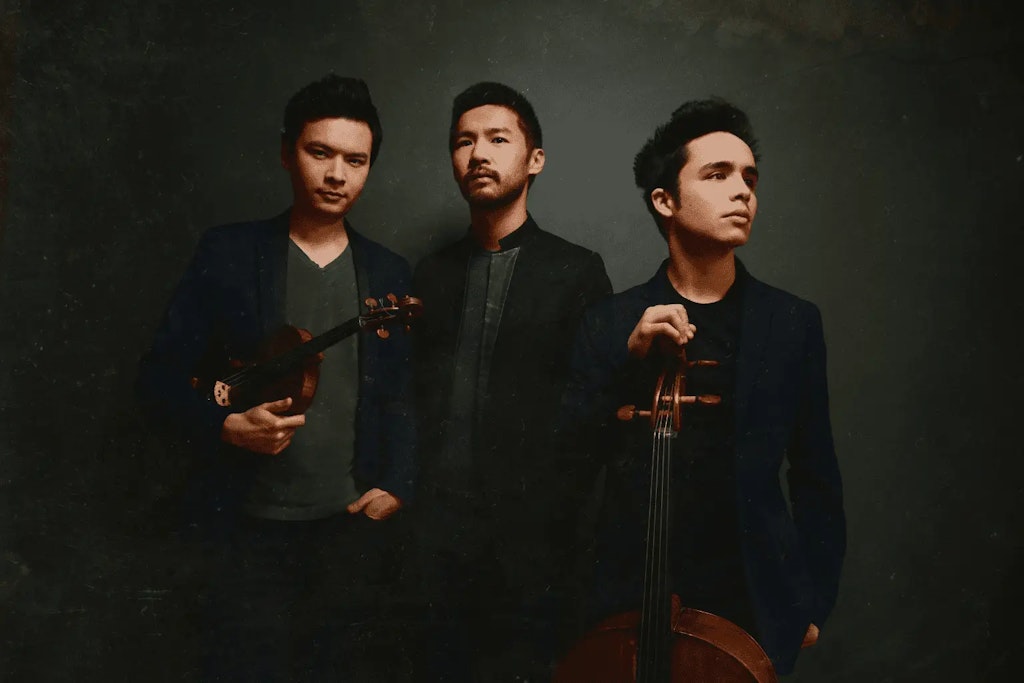
Caramoor is delighted to welcome back the internationally celebrated Escher String Quartet for a captivating program celebrating America’s rich musical heritage. A former BBC New Generation Artist and recipient of the Avery Fisher Career Grant, and the Ernst Stiefel String Quartet-in-Residence at Caramoor in 2007-08, the Escher has earned global acclaim for its profound musical insight and rare tonal beauty. Joining them for Dvořák’s piano quintet masterpiece is renowned pianist Alessio Bax, revered worldwide for his poetic artistry and technical brilliance. 

Artists

Adam Barnett-Hart, violin
Brendan Speltz, violin
Pierre Lapointe, viola
Bryan Lee*, cello
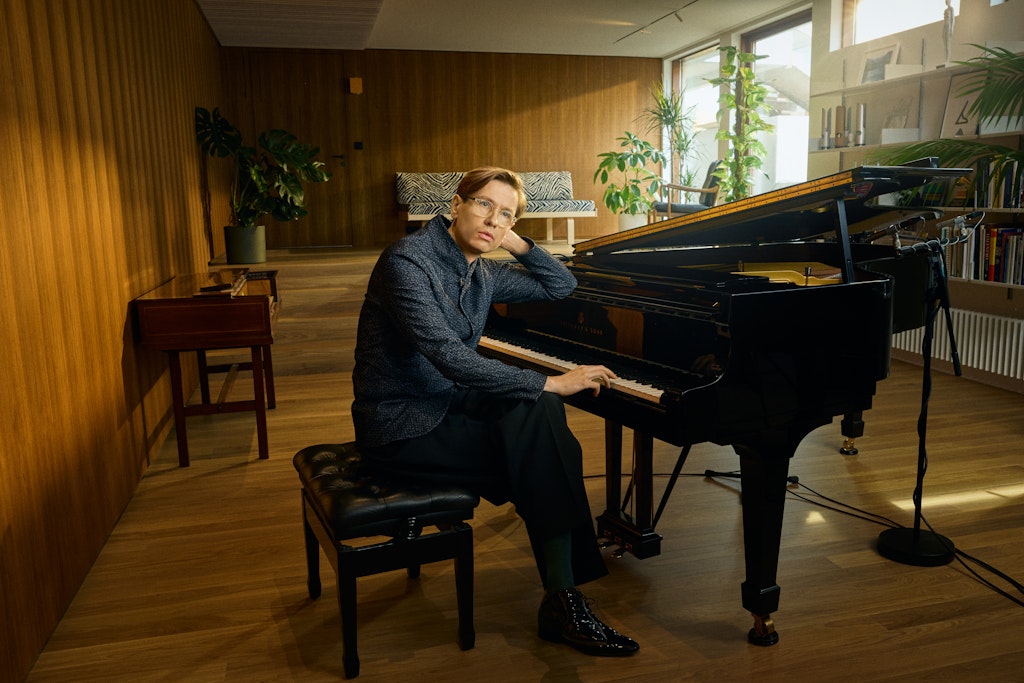
Alessio Bax, piano

*Please note that violinist Bryan Lee will be performing in place of Brendan Speltz, who is recovering from a recent injury.

Program

Samuel Barber: String Quartet in B Minor, Op. 11 
Florence Price: Quartet No. 2 in A Minor  
Antonín Dvořák: Piano Quintet in A Major, Op. 81 


“… eloquent, full-blooded playing. The four players offer a beautiful blend of individuality and accord …” – BBC Music Magazine 


About the Music

SAMUEL BARBER
String Quartet in B Minor, Op. 11

Few pieces of classical music become familiar in the popular consciousness far beyond their time of composition—in fact, we may be able to point to just two: Beethoven’s “Ode to Joy” from his Symphony No. 9, and Barber’s Adagio for Strings. We turn to the former in times of triumph and celebration, and to the latter in times of grief or reflection. The Adagio has been played for the funerals of U.S. Presidents Franklin D. Roosevelt and John F. Kennedy, scientist Albert Einstein, actress Grace Kelly, and at remembrances for the victims of the 9/11 attacks on the Twin Towers in New York City. Unexpectedly, it has also found popularity in the club scene as a sample used by DJs Paul Oakenfold in 1996 and Tiësto in 2005. 

What makes this music resonate so intensely with us? Esteemed violinist and pedagogue, Ida Kavafian, who teaches at the Curtis Institute of Music in Philadelphia where Barber studied, has observed the Adagio is “all about tension.” Others have described it as a meditation. In fact, Barber was probably inspired by a section in Book III of the poet Virgil’s work Georgics that describes the powerful formation of a wave building from the depths of the ocean to its crash upon the shore. This music is the sound of the sublime, which communicates something of the mysterious, often unknowable, grandeur of life and the swells of experience we ride. 

This emotion is most intimately communicated in the original version of the Adagio, as the slow movement of his String Quartet, Op. 11. The quartet was written in 1935, the year that Barber was awarded the American Academy’s Prix de Rome, which allowed him to spend two years working in Europe with a stipend and expenses paid. In the opening movement the mood is somewhat austere, which seems slightly at odds with the skipping, swaying, rhythmic patterns that glimpse at a lighter temperament. As it fades away almost imperceptibly, we hear the sole sound of the first violin introducing the famous theme of the Adagio. The final movement grows from a tentative start and becomes suddenly recognizable to our ears as an abbreviated remake of the opening movement, thereby bringing the entire work full circle. 

Three years later, Barber’s string orchestra arrangement of the Adagio movement was performed on an NBC radio broadcast conducted by Arturo Toscanini. It launched Barber into global fame. 

FLORENCE PRICE
Quartet No. 2 in A Minor

On a midsummer evening in 1933, the Chicago Symphony Orchestra premiered Florence Price’s Symphony No. 1, making her the first African American to have a work performed by a major American orchestra. The concert, attended by George Gershwin, was the culmination of an incredible run for Price who took home multiple prizes in the 1932 Wannamaker competition. 

Born in Little Rock, Arkansas, Price was taught and encouraged by her mother before advancing to New England Conservatory, where she studied organ and piano, as well as composition with renowned American composer George Whitefield Chadwick, who was then serving as Director of the school. After graduation she taught, eventually advancing to head of the music department at Clark College in Atlanta. Later, Price and her husband settled back in Little Rock, but the prospect of better opportunities, and escaping the regional racial violence, prompted them North to Chicago. There, Price continued refining her talent at Chicago American Conservatory, and the Chicago Musical College (now Roosevelt University), and became part of a vibrant circle of African American artists in the city’s South Side. 

Astonishingly prolific, Price composed around 250-300 works (the bulk of which remains unpublished) for nearly every type of ensemble, including numerous choral, solo, piano, organ, chamber, and orchestral. Most of these were discovered only recently, when in 2009 a couple unknowingly purchased Price’s summer home, finding 19 boxes in the attic containing her manuscripts. Based on that, Price is believed to have written four string quartets, though the number could change if other collections are found.  

Price’s String Quartet No. 2 was written in 1935 (the same year as Samuel Barber’s String Quartet, Op. 11) and was first published in 2019. A hallmark of Price’s sound is her unique blend of influences. We hear this in the A Minor string quartet with the slightly bluesy melody of the opening movement that floats amidst the romantic evocation of longing. The second movement pivots between shades of melancholy and gleaming beauty. In the third, Price includes the Juba, a dance that emerged as enslaved people of African descent expressed their cultural heritage even when deprived of drums. Comprised of a rhythmically complex style of percussive dance that utilized stomping, hand clapping, and body patting, it is often considered the precursor to tap dance. The final movement braids together carefree and earnest emotions that converge to end the work with a dramatic flourish. 

ANTONÍN DVOŘÁK
Quintet in A Major for Piano, Two Violins, Viola, and Cello, B. 155, Op. 81 

For years Antonín Dvořák worked as professional musician in Prague, playing viola in the orchestra of the Provisional Theatre, which opened in 1862 as a home for Czech arts in the Austro-Hungarian empire. There, Dvořák was exposed to a wide range of repertoire and occasional guest conductors, like the famed opera composer, Richard Wagner. Composing was something Dvořák did on the side until 1871 when he decided to leave performing to focus on writing. While cultivating his individual voice, Dvořák developed a style that fused traditional concert music with Slavic folk idioms. It captured attention. Among those who noticed was the composer, Johannes Brahms. He was introduced to Dvořák’s compositions while evaluating entries for the Austrian State Scholarship—a prize Dvořák applied for annually. Brahms urged his publisher to take Dvořák as a client, adding emphatically, “In any case, he is a very talented man. Moreover, he is poor!” 

Brahms’ support and mentorship completely changed the course of Dvořák career—much like Brahms’ trajectory was changed by Robert Schumann’s endorsement decades earlier. These three composers were also connected by their choices to write monumental works for piano quintet, a genre that was mostly overlooked in favor of quartets or trios.   

Schumann’s piano quintet was the first Romantic era piano quintet, notable for the richness of conversation between the parts, responding and reacting to each other rather than simply trading solos over a supporting accompaniment. Twenty-two years later, Brahms followed with his piano quintet, a work with the scope and drama of a symphony, stuffed into the constraints of the chamber form. Dvořák wrote his eight years later in 1872, but this first piano quintet was shelved in dissatisfaction. His successful second attempt came over a decade later, in 1887, and was published as Op. 81. The expansive work opens quietly with a gently rocking duo between the piano and cello in an exchange that sounds more like the middle of an ongoing discussion rather than a beginning. Suddenly, the rest of the ensemble abruptly enters, nearly catching the listener off-guard as the music is propelled by a brilliant, shimmering urgency. The second movement is built around a traditional Slavic musical form called a dumka, which is pensive and shadowed. The upbeat Scherzo is styled as a rapid Bohemian dance called the furiant that alters the melancholic mood, and the remarkable conclusion juxtaposes drama with levity, punctuated by a quiet chorale. 

— Kathryn Bacasmot 

Kathryn Bacasmot is an independent writer about music.

About Escher String Quartet

Escher String Quartet has received acclaim for its profound musical insight and rare tonal beauty. A former BBC New Generation Artist and recipient of the Avery Fisher Career Grant, the quartet has performed at the BBC Proms at Cadogan Hall and is a regular guest at Wigmore Hall. In its hometown of New York, the ensemble serves as season artists of the Chamber Music Society of Lincoln Center. 

Highlights of the 2024-2025 season find Escher String Quartet performing in many of the great venues and organizations in the United States, including Alice Tully Hall, Philadelphia Chamber Music Society, Isabella Stewart Gardner Museum, Shriver Hall Concert Series, Chamber Music Pittsburgh, University Musical Society at University of Michigan, Spivey Hall, and Chamber Music Houston, among others. In addition to their North American engagements, the quartet returns once again to Wigmore Hall for a BBC live broadcast recital as well as other engagements in Germany and continental Europe. 

Escher String Quartet has made a distinctive impression throughout Europe, with recent debuts including the Amsterdam Concertgebouw, Berlin Konzerthaus, London’s Kings Place, and Auditorium du Louvre. The group has appeared at festivals such as the Heidelberg Spring Festival, Budapest’s Franz Liszt Academy, the Risør Chamber Music Festival in Norway, and more. Alongside its growing European profile, the Escher quartet continues to flourish in its home country, performing at the Aspen Music Festival, Bravo! Vail, Santa Fe Chamber Music Festival, Bowdoin Music Festival, Toronto Summer Music, and Ravinia. 

Escher String Quartet achieved critical success last season in their performances of the entire cycle of string quartets by Bela Bartok in single concert format, both at Chamber Music Society of Lincoln Center and the Santa Fe Chamber Music Festival. Recently, the Escher quartet has had successful releases of multiple albums, including string quartets by Pierre Jalbert and the Escher’s studio recording of the complete Janacek quartets and Pavel Haas quartet no. 2 with multi-award-winning percussionist Colin Currie (BIS Label). Recordings of the complete Mendelssohn quartets and beloved romantic quartets of Dvorak, Borodi,n and Tchaikovsky were released on the BIS label in 2015-18 and received with the highest critical acclaim. 

In 2019, DANCE, an album of quintets with Grammy award winning guitarist Jason Vieaux, was enthusiastically received, and in 2021, the Escher’s recording of the complete quartets of Charles Ives and Samuel Barber was met with equal excitement. The quartet has also recorded the complete Zemlinsky String Quartets in two volumes, released on the Naxos label in 2013 and 2014. 

Escher String Quartet takes its name from the Dutch graphic artist M.C. Escher, inspired by Escher’s method of interplay between individual components working together to form a whole. 

For more information about Escher String Quartet, please visit their website.

About Alessio Bax, pianist

Combining exceptional lyricism and insight with consummate technique, Alessio Bax is without a doubt “among the most remarkable young pianists now before the public” (Gramophone). He catapulted to prominence with First Prize wins at both the 2000 Leeds International Piano Competition and the 1997 Hamamatsu International Piano Competition and is now a familiar face on five continents as a recitalist, chamber musician, and concerto soloist. He has appeared with over 150 orchestras, including the New York, London, Royal, and St. Petersburg Philharmonic Orchestras, the Boston, Baltimore, Dallas, Cincinnati, Seattle, Sydney, and City of Birmingham Symphony Orchestras, and the Tokyo and NHK Symphony in Japan, collaborating with such eminent conductors as Marin Alsop, Vladimir Ashkenazy, Sir Andrew Davis, Hannu Lintu, Fabio Luisi, Sir Simon Rattle, Ruth Reinhardt, Yuri Temirkanov, and Jaap van Zweden. 

As a renowned chamber musician, he recently collaborated with Lisa Batiashvili, Joshua Bell, Ian Bostridge, Lucille Chung, James Ehnes, Vilde Frang, Steven Isserlis, Daishin Kashimoto, François Leleux, Sergei Nakariakov, Emmanuel Pahud, Lawrence Power, Jean-Guihen Queyras, Paul Watkins, and Tabea Zimmermann, among many others. 

Since 2017, he has been the Artistic Director of the Incontri in Terra di Siena Festival, a summer music festival in the Val d’Orcia region of Tuscany. He appears regularly in festivals such as Seattle, Bravo Vail, Salon-de-Provence, Le Pont in Japan, Great Lakes, Verbier, Ravinia, Music@Menlo, Aspen and Tanglewood. 

In 2009, he was awarded an Avery Fisher Career Grant, and four years later he received both the Andrew Wolf Chamber Music Award and the Lincoln Center Award for Emerging Artists. 

Bax’s most recent album releases are Forgotten Dances and Debussy & Ravel for Two with Lucille Chung. His celebrated Signum Classics discography also includes Italian Inspirations; Beethoven’s Hammerklavier and Moonlight Sonatas (a Gramophone Editor’s Choice); Beethoven’s Emperor Concerto; Bax & Chung, a duo disc with Lucille Chung; Alessio Bax plays Mozart, recorded with London’s Southbank Sinfonia; Alessio Bax: Scriabin & Mussorgsky (named “Recording of the Month … and quite possibly … of the year” by MusicWeb International); Alessio Bax plays Brahms (a Gramophone Critics’ Choice); Bach Transcribed; and Rachmaninov: Preludes & Melodies (an American Record Guide Critics’ Choice). Recorded for Warner Classics, his Baroque Reflections album was also a Gramophone Editor’s Choice. He performed Beethoven’s Hammerklavier Sonata for Daniel Barenboim in the PBS-TV documentary Barenboim on Beethoven: Masterclass, available on DVD from EMI.  

At the age of 14, Bax graduated with top honors from the conservatory of Bari, his hometown in Italy, and after further studies in Europe, he moved to the United States in 1994. He has been on the piano faculty of Boston’s New England Conservatory since the fall of 2019 and serves as co-artistic director of the Joaquín Achúcarro Foundation for emerging pianists. 

Bax lives in New York City with pianist Lucille Chung and their daughter, Mila. 

For more information about Alessio Bax, please visit his website.


Seating Options

Garden Listening / For those who prefer a more casual concert environment, Garden Listening tickets are $20, and are free for Members and children under 18 years old. Enjoy a picnic, admire a starry sky, or relax with the family. Please Note! This ticket option has no view of the stage or access to the theater. The concert will be broadcast onto Friends Field with audio only. We ask that you bring your own seating for Garden Listening. If you like this seating option, check out all of the summer concerts that have Garden Listening.


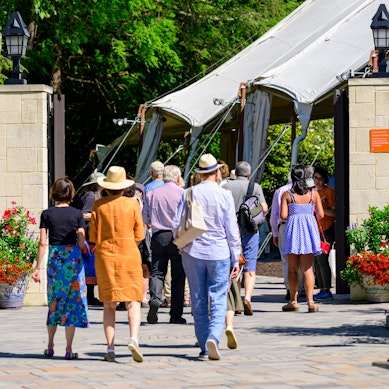
    Summer Season Shuttle / Take the FREE shuttle from Metro North’s Katonah train station to and from Caramoor! The shuttle runs before and after every summer afternoon and evening concert. There is no RSVP to get on the shuttle, it will be there when you arrive (in the parking lot side of the station). If it’s not there, it’s just making the loop and should be back within 5–10 minutes. The shuttle will start running 2.5 hours before the concert, and 30 minutes after the concert ends.

Rain or Shine / All events at Caramoor take place rain or shine. However, this performance is under our fully covered Venetian Theater tent.


Caramoor is proud to be a grantee of ArtsWestchester with funding made possible by Westchester County government with the support of County Executive Ken Jenkins.
All concerts made possible by the New York State Council on the Arts with the support of the Office of the Governor and the New York State Legislature.