Poiesis Quartet Begins Caramoor Residency with Impactful School Visits
By Marc Lowenstein
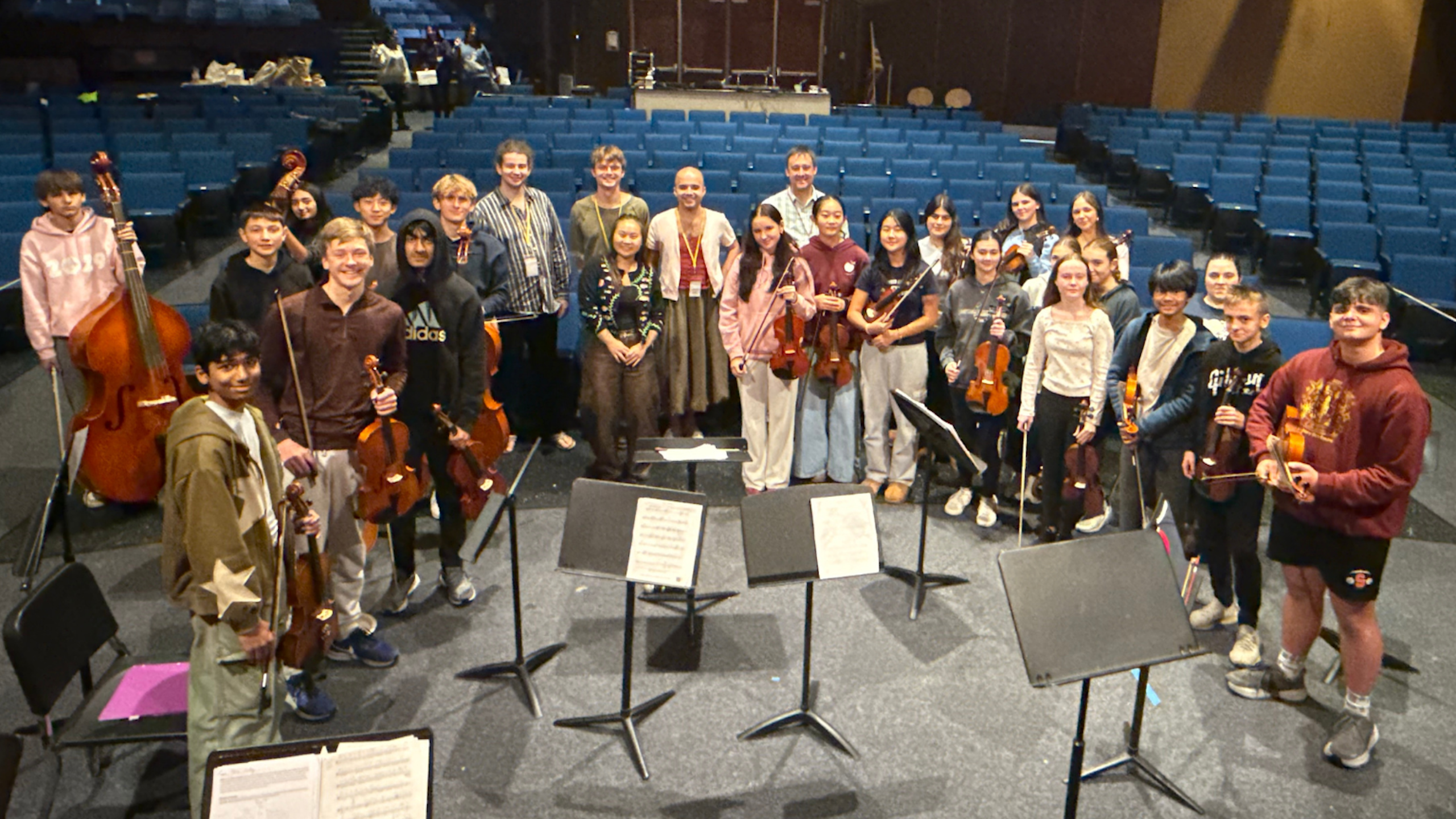
Caramoor’s 2025–26 Ernst Stiefel String Quartet-in-Residence, the Poiesis Quartet, recently completed the first portion of their residency and their debut concert at Caramoor in the Music Room of the Rosen House, which the NY Times heralded as one of the “Best Classical Performances of 2025.” Their fall residency also focused on educational engagement, including concerts, coaching sessions, and conversations with young musicians through a series of school visits across Westchester and Rockland counties.
Formed in 2022 at Oberlin Conservatory, the Poiesis Quartet—Sarah Ying Ma (violin), Max Ball (violin), Jasper deBoor (viola), and Drew Dansby (cello)—has quickly gained national attention. They are the 2025 Banff International String Quartet Competition Grand Prize winners and the 2023 Fischoff National Chamber Music Competition Grand Prize winners. In 2024, they joined the Concert Artists Guild roster. Most recently, they have been signed by professional management, marking another major milestone in their early career.
Last month, Poiesis visited 11 schools, performing for more than 500 students, teachers and faculty and working directly with around 350 students from area schools’ orchestra and band programs. These visits gave students a close look at professional chamber musicians and offered immediate, practical feedback that teachers say is already making a difference in their classrooms.
I joined the quartet during their visit to Somers High School, where they spent the morning with students in Mike Maino’s orchestra class. The session combined performance, conversation, and Q&A.

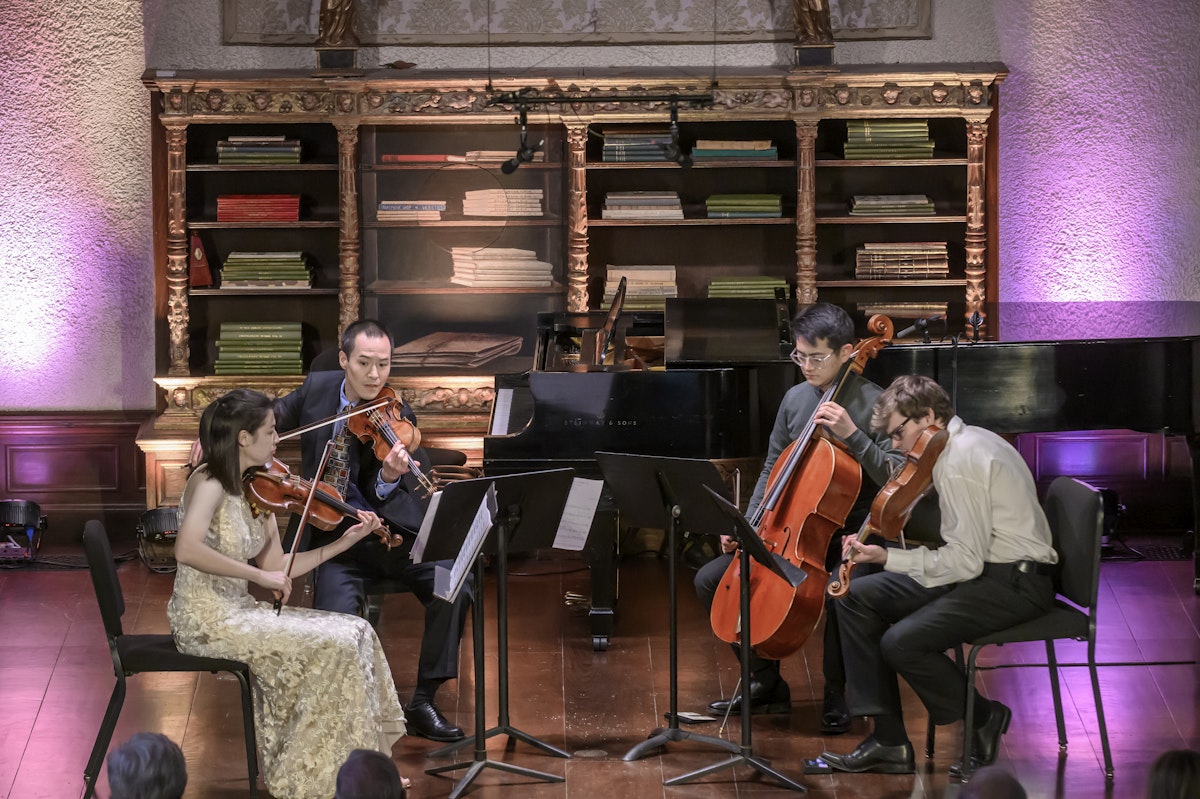
At the start, the quartet introduced themselves and talked about what it takes to succeed as a chamber ensemble. They emphasized three essentials: communication, respect and patience.
They explained that a quartet doesn’t function without trust and consistent effort, and that these skills matter just as much as musical ability. As the artists described their process and their years working and growing together, I could tell the students were being given realistic insight into the professional world.
The quartet then performed two works by composer Kevin Lau:
String Quartet No. 3
String Quartet No. 7, “Surfacing”
Before each piece, the musicians provided background on Lau and described differences in his writing style across the ten years that separate the two quartets.
Cellist Drew Dansby spoke specifically about Surfacing. He explained that Lau wrote the piece during a period of recovery from trauma due to a medical emergency and that the music reflects that process—moving through tension, uncertainty, and eventual clarity. His comments helped students listen for how emotional experiences can shape musical structure.
Student Engagement and Reaction
After the performance, the quartet opened the room for questions and comments. Students engaged right away.
One student shared:
“The first piece felt more cinematic, and the second felt like it was telling a story, especially after the context you gave us.”
Another student added an observation about Surfacing, describing it as:
“Controlled chaos,”
Another student picked up on the “range of register building tension in each piece.” And that the “lower octave in the 1st piece and the higher octave in the second piece” contributed to this tension. The artists agreed and the student went on to say they felt the tension in the second piece expressed “overall tragedy.”
The quartet was asked “Why do you use so much body movement when you play?”
The quartet explained that movement serves several purposes and specifically stated expressing emotion physically, adding a sense of fun and theatricality and supporting communication between players as the main reason they incorporated it into their playing.
In addition to the performance, the members of Poiesis stayed and worked with students in small groups and as an ensemble. When I followed up with their teacher Mike Maino, he shared:
“Our students were thoroughly impressed with Poiesis Quartet’s visit. The music they selected and performed resonated with many of our students, and the context they provided made those selections more impactful.
Our orchestra has been discussing and implementing some of the feedback the quartet provided, and I am seeing a change in both their playing and their musical perception of each other.
These visits are essential to our curriculum. Hearing professional players perform right in our own auditorium, and receiving helpful, constructive feedback, elevates our work in both the short term and long term. We’re already looking forward to their return…”
The program is facilitated by Caramoor’s Artistic Department Coordinator, Hallie Eichholz who told me “from the first Zoom meeting with the Poiesis Quartet, I could tell they were genuinely excited to get involved. They were so eager to be out in the community, and they really embraced it and delivered. Their fall schedule shows just how ready they were to jump in.”
The Poiesis Quartet’s work this fall highlights the value of direct engagement between professional musicians and school music programs. Hearing a quartet live helps students understand musical detail—phrasing, articulation, texture—in ways that recordings can’t fully convey.
From the Classroom to the Music Room
When I attended the Poiesis Quartet performance in the Music Room at Caramoor later that week, I immediately noticed there were more young people in the audience than usual. I imagined some of them as the same students who had asked such thoughtful, insightful questions during the school visits, not only about music, but about artistic intention, resilience, and the emotional life of a performer. The possibility that they were inspired to come hear the quartet again felt deeply meaningful. Watching them listen so intently, I was reminded of how powerful these connections can be, and I felt genuinely proud to be part of an organization that uplifts and inspires young musicians and helps shape the next generation of artists and audience members.
Looking Ahead
The Poiesis Quartet will return to Caramoor in the spring for more school visits, coaching, and public performances. Their continued presence will allow students to revisit ideas introduced this fall and further develop their musicianship.
Caramoor’s Ernst Stiefel String Quartet-in-Residence program is designed to create this type of long-term, meaningful engagement. It is supported by the Ernst Steifel String Quartet in Residence Endowment, the Marc Haas Foundation, the Old Oaks Foundation and the S & L Marx Foundation. Caramoor is deeply grateful for their support and for the teachers and administrators who welcome us into their schools. If you are interested in making a gift to support the Ernst Stiefel String Quartet in Residence program, you may do so by clicking here.