
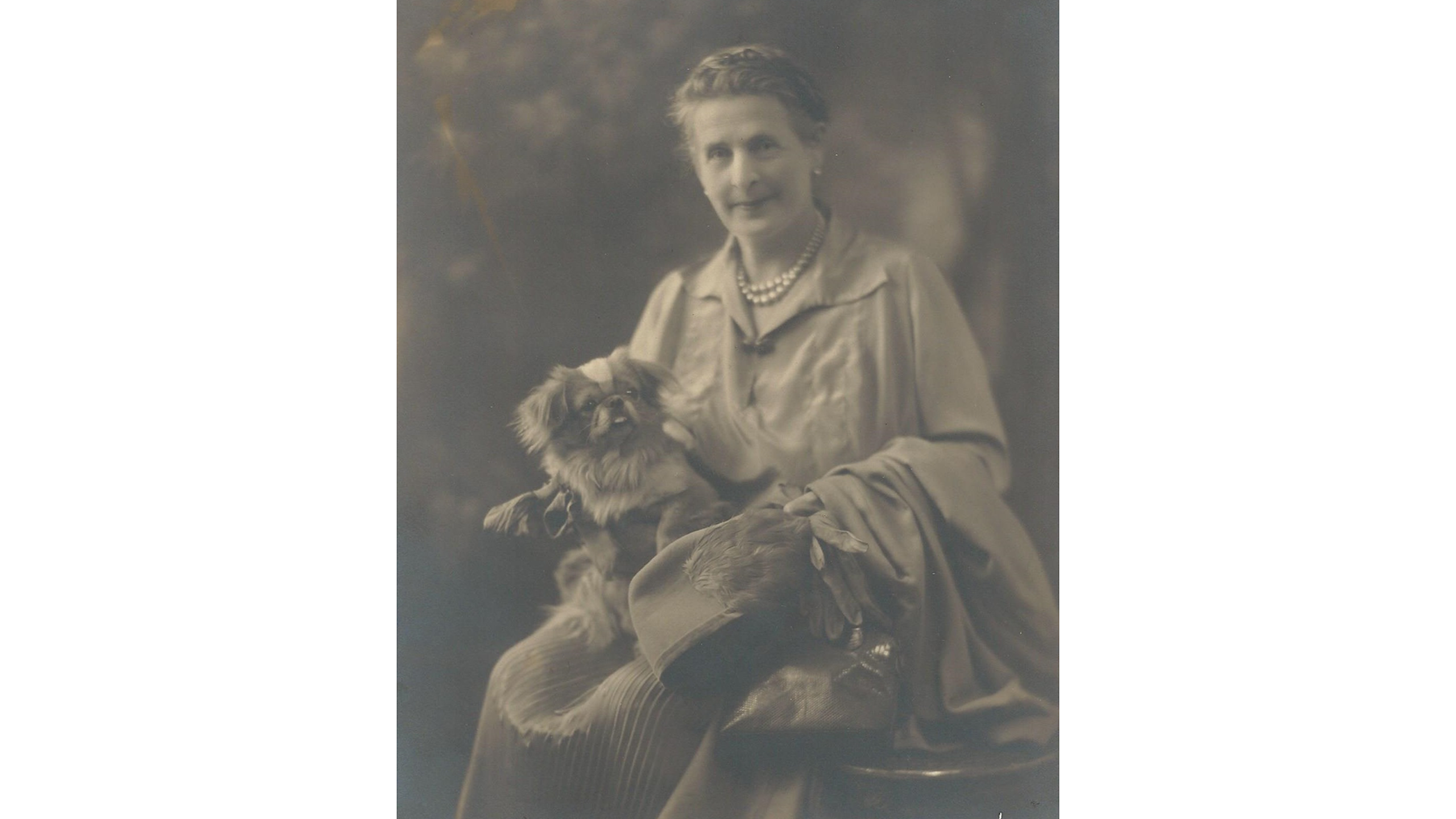
Summer Research Fellow Encounters with Flora
by Megan Snopik
The 2026 Summer Research Fellow Megan Snopik took a moment from her work delving into archival boxes at the Rosen House and transcribing a large cache of letters from Lucie Rosen's mother Flora Bigelow (neé Dodge) Guest (1868-1964) to describe a few special examples for this guest post.
Upon starting my work in the Rosen house collections, I was hoping to find a connection between the daring and outspoken Flora Bigelow, the rebellious and witty Flora Bigelow Dodge, and the proper socialite Flora Bigelow Guest. Largely present in her letters to Lucie are detailed accounts of her society engagements, travel plans, and her overwhelming desire to see her long-distance daughter and grandchildren. Among the key discoveries so far this summer are a catalogue of her – at times rocky – relationship with her daughter and her various adventures around the world with her second husband, the Honorable Lionel Guest. One of the most shocking aspects of Flora’s correspondence, however, contrasts her proper socialite status (as she details her meetings with Princes, Dukes, and even Winston Churchill) with messages she sent to her daughter and grandchildren to demonstrate the travels, sights, and curiosities as a child would see them best: in illustrated form.
Flora would frequently request Lucie’s young children to “write” her and would send the children letters (one presumes) to be read aloud. Flora never wasted any room on her letters to loved ones, often filling 8-9 pages with her dense script and still having to write her salutations in the margin of the first page, making her sketches even more extraordinary. The sketches she does for young Walter and Anne show a tender and sincere side of Flora—as a grandmother who misses and loves her grandchildren.
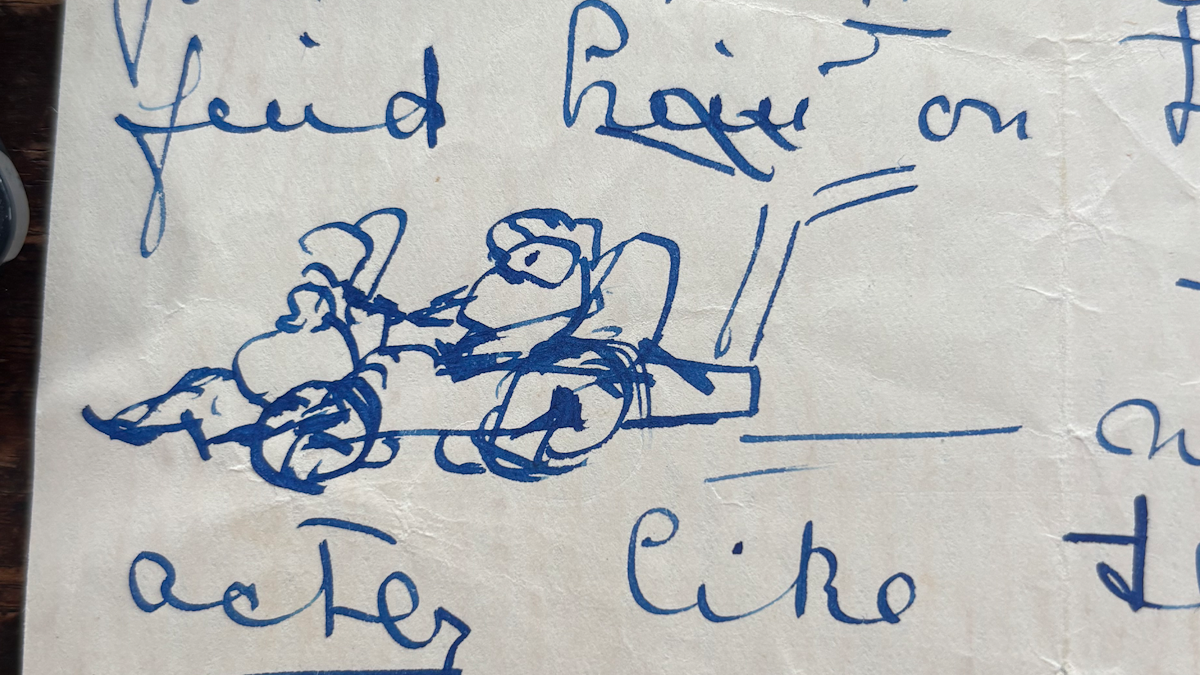
In the below letter, written to young Walter she describes John Dodge—his uncle and Lucie’s brother—“motoring” on his trip through New South Wales, Australia. She tells young Walter to ask his mother to show him on the map all the places his Uncle John has been (Canada, China, and Japan—he would later go through Mongolia and down to Istanbul).

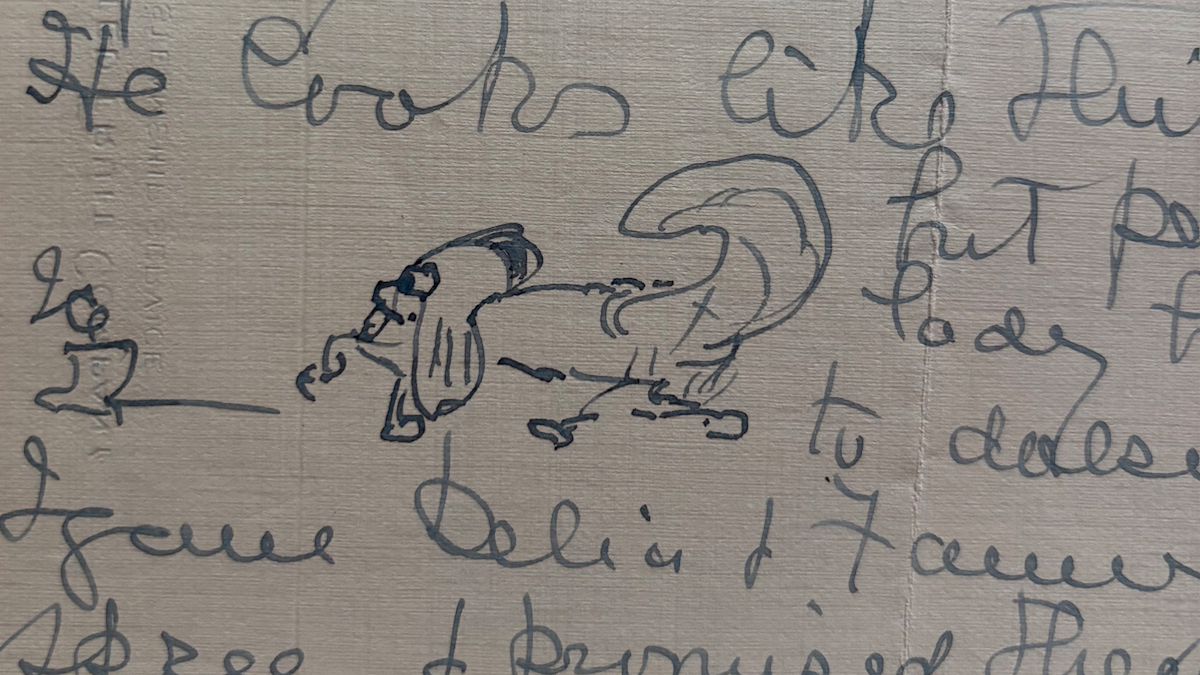
In a later letter to young Anne, she draws scenes from her boat on route to Cuba to describe her travels as well as detail her social engagements for Anne to relay to Lucie. She sketches a Cuban nursemaid giving a baby a bottle and, pictured below, a small dog (named Frankie) that chases ice cubes around the deck.

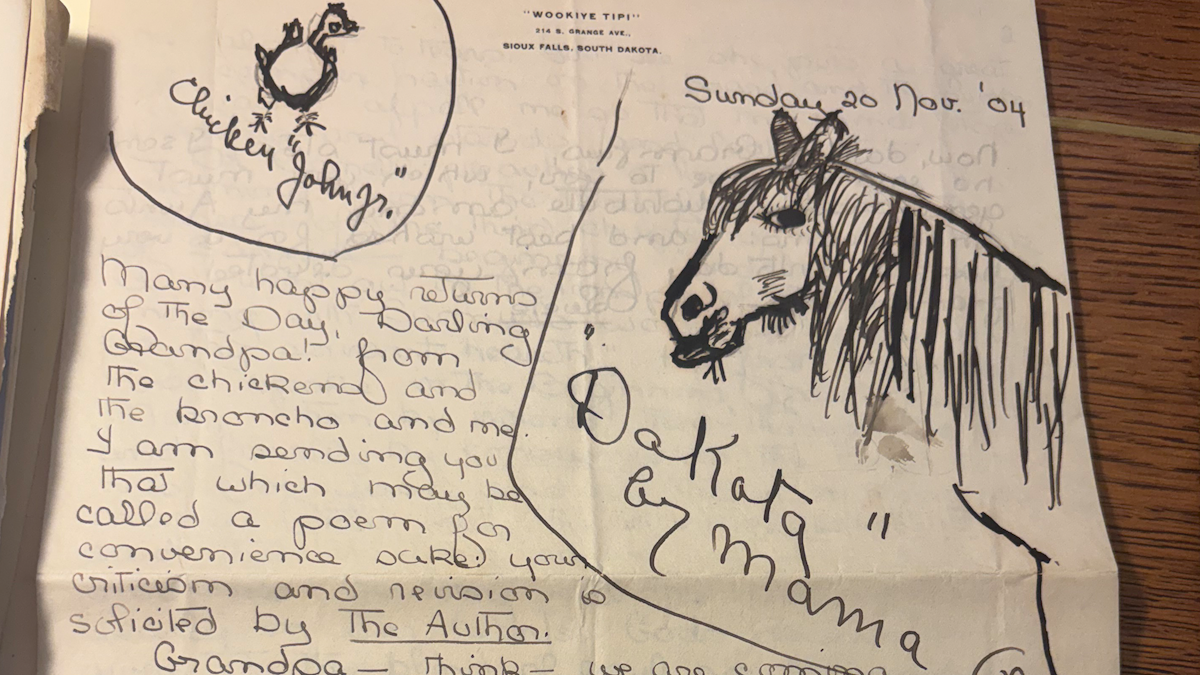
Moreover, Flora’s amateur sketches seem to have been for Lucie and John’s amusement as well. Seen in the earlier Flora letters housed at the New York Public Library’s Bigelow family papers, she also drew pictures for Lucie to send to her grandfather of their South Dakota farm animals (pictured are Dakota their wily pony and a chicken named “John Jr.”).

Her love for her grandchildren and wish to be connected to them comes as no surprise given the high amount of involvement Flora’s own father, John Bigelow, had in the raising of his grandchildren Lucie and John through their mother’s years of travel, divorce, and social visits. Her wish to advise, help, and entertain her grandchildren shows a quirky and artistic side that contradicts the London societal elite image she worked so hard to create after her divorce and remarriage.
Thanks, Megan, for your guest post. Caramoor's Summer Research Fellowship is an annual opportunity to work with the archives and collection at the Rosen House. The 2027 call for applications will be announced later this year.