
This week, it's time for a post by a guest contributor, docent Randy Hans. Randy has been sharing information about the Rosen House with visitors for six years. In this post, he delves into a Rosen House Connection from across the Atlantic.
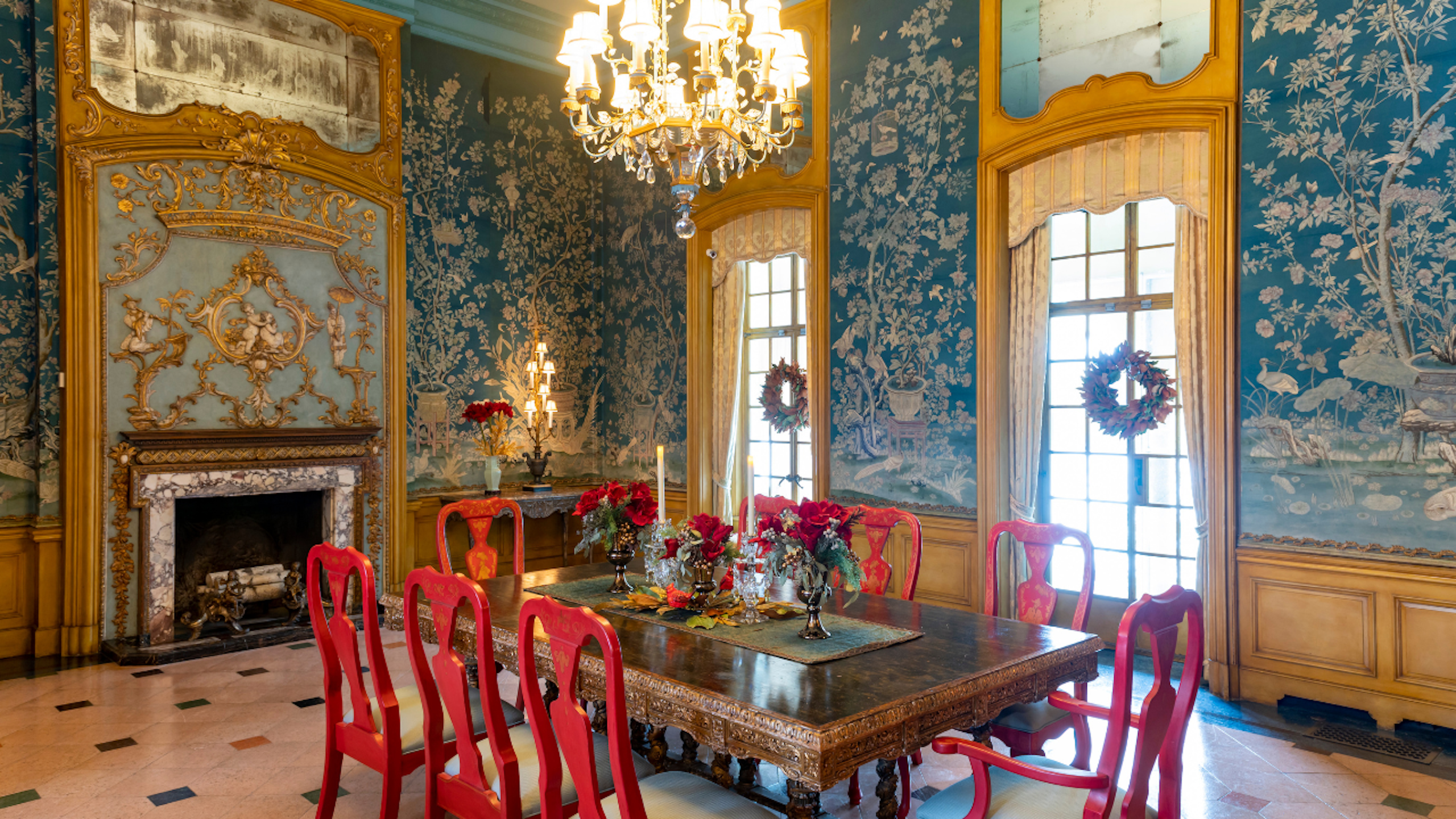
My social media feed recently carried a photo with a blue wallpaper background that looked familiar: it reminded me of the Formal Dining Room at the Rosen House.
The photo was taken in the Cabinet Room at Houghton Hall in Norfolk, England, which was built in the 1720s for Horace Walpole, Great Britain’s first Prime Minister. The house represents “…a collaboration between the two defining British architects of the age – Colen Campbell and James Gibbs – and with lavish interiors by William Kent…” (source: Houghtonhall.com.)

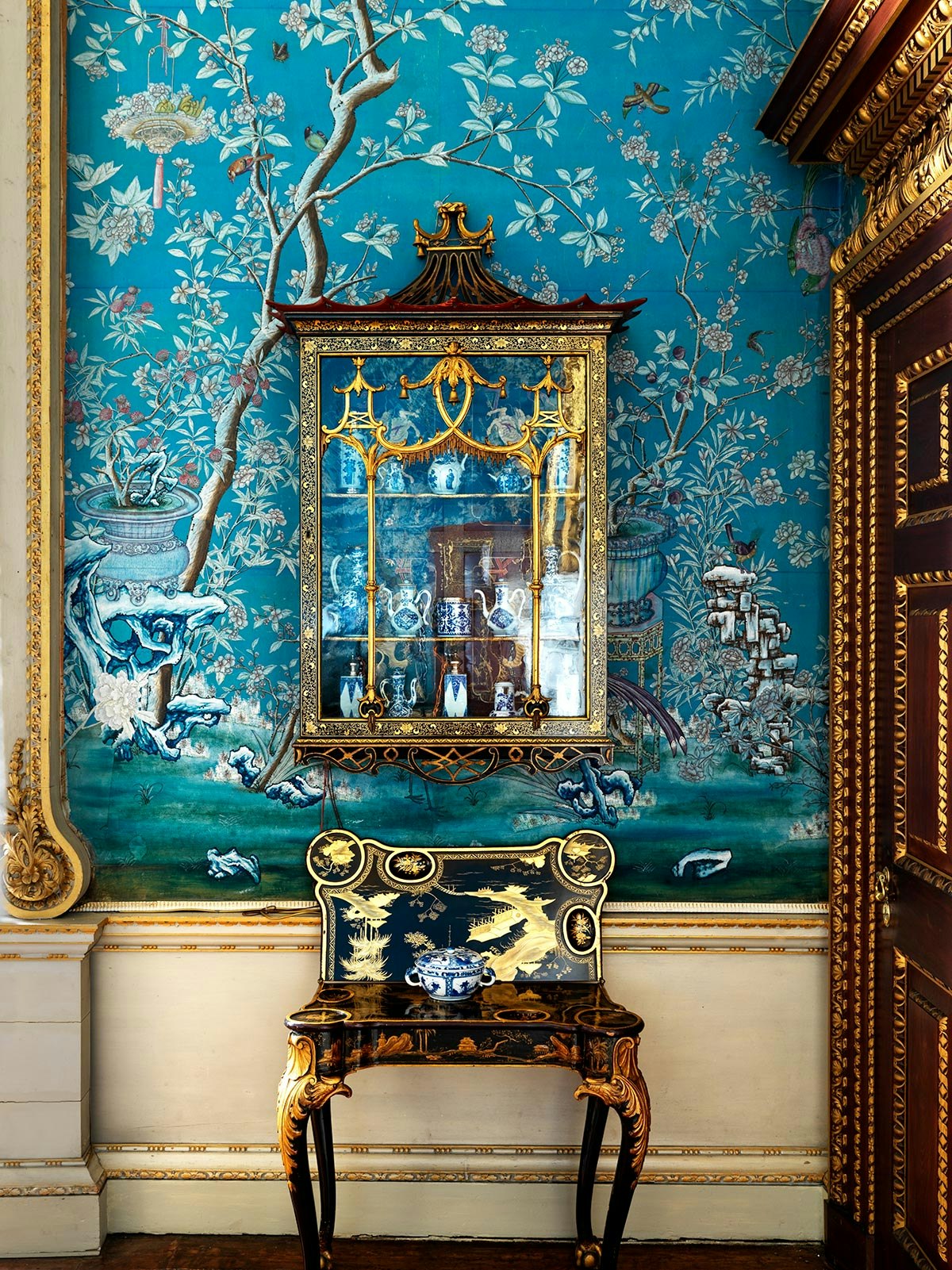
In 2018 De Gournay, a firm specializing in historical interiors, reproduced the wallpaper from a set of nearly 250-year-old unused panels found stored in the attic of the house, according to Degournay.com. “The wallpaper is an unrivalled example of the ‘Chinese style’ that captivated 18th-century Europe…[r]ecords state Houghton’s original Chinoiserie wallpaper was installed around 1789 supposedly ahead of a visit for the then Prince of Wales.”
Chinoiserie (pronounced “shin-waa-zuh-ree”) emerged as a style of decorative arts and architecture in the late 17th-century, becoming popular in Europe in the 18th-century. It is characterized by idealized subjects (people, flora, and fauna) representing Europeans’ romanticized view of “exotic” Chinese culture, as trade with China and other Asian nations was increasing at the time.
The Rosen House contains several examples of Chinoiserie collected by Lucie and Walter, including – in the Formal Dining Room alone – the doors, fireplace overmantel, and original 1743 Giles Grendey chairs (since replaced with facsimiles.)
Similar to Houghton House’s Cabinet Room, the wallpaper in the Rosen House Formal Dining Room, shown in the photo below, was hand-painted in tempera and ink in the 18th-century for export from China to the West. This wallpaper was produced in panels that were 46”- 48” wide, like murals. (By contrast, printed wallpaper is produced today in narrower rolls with a repeating pattern.)
Walter Rosen bought twenty-three panels from his antiques dealer in Venice, Adolph Loewi, in August 1928. They were from a “Piedmontese country house on the hills above Turin” (subsequently identified as Villa Appiani di Castelletto, Moncalieri.) Sixteen panels were installed in the Dining Room, and the remainder were traded back to Loewi in 1939. Walter himself noted the similarity to wallpaper at Houghton House at the time.
The design features flowering trees and potted plants with birds (in flight, in cages, on branches, and on the ground) in muted colors against a vivid blue sky. (The colorful birds and foliage in the wallpaper installed at both sites were originally more vibrant, but have faded over time.) Each panel is unique. The foreground of one panel includes lotus plants in water. The overall effect in the room is powerful.

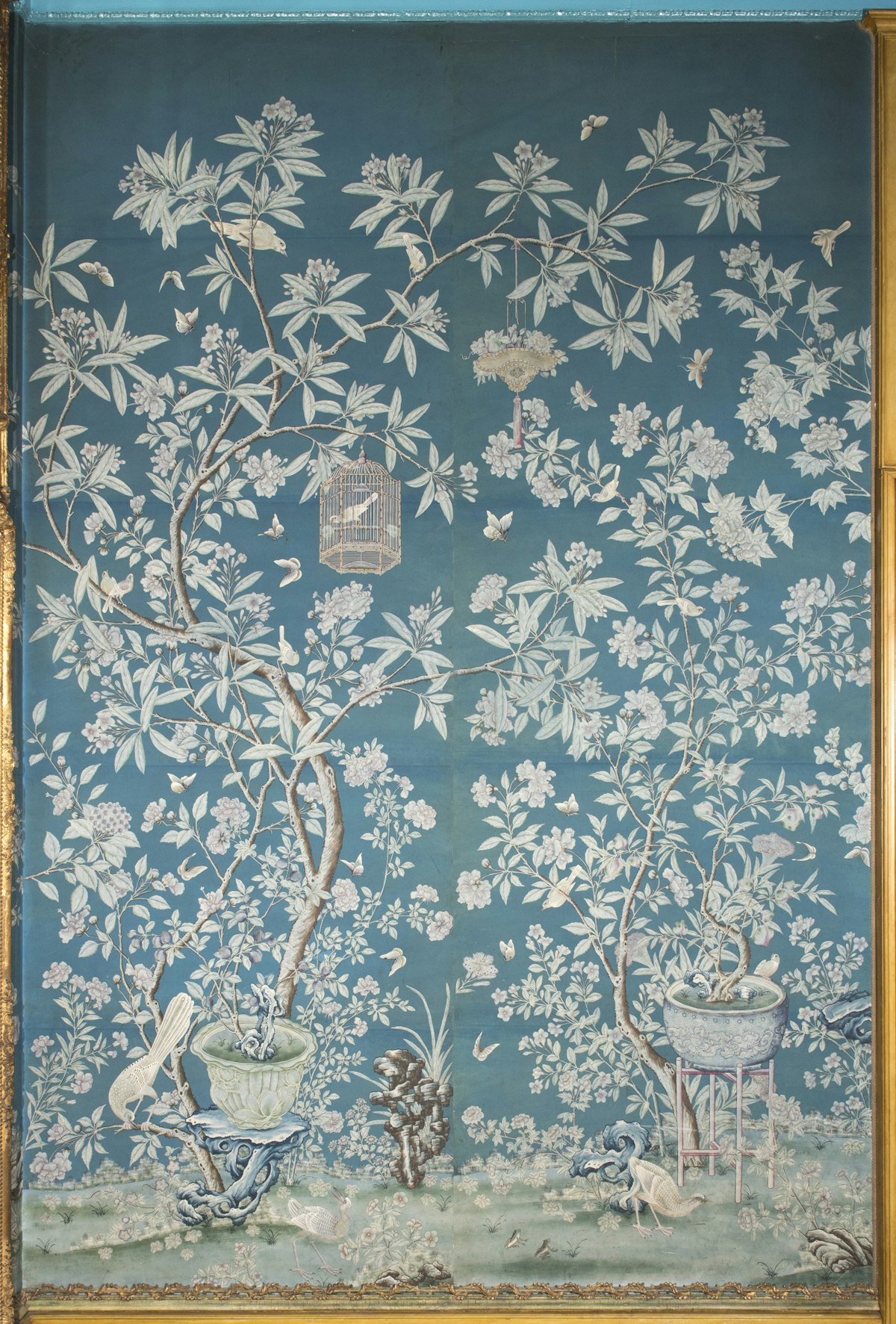
What do you think? Could both wallpapers have come from the same region, or even workshop, in 18th-century China?
Would you like to recreate the feeling of the Rosen House Formal Dining Room or Houghton Hall’s Cabinet Room in your own home? If so, visit https://degournay.com/discover-details/houghton-hall-and-de-gournay