
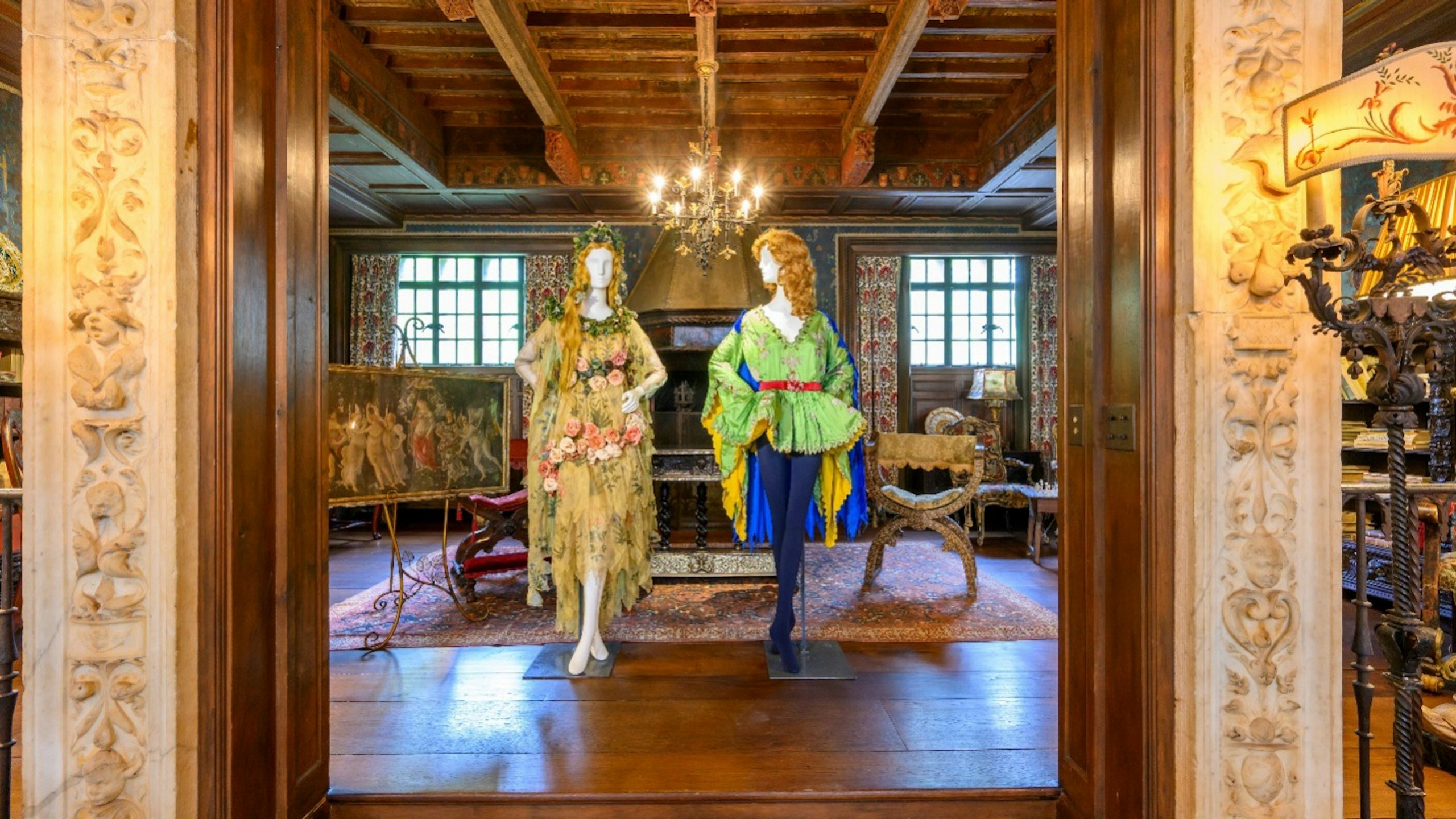
Docent Randy Hans links a costume from the Focus Tour to the Rosens’ friend sculptor Malvina Hoffman in this guest post.
A highlight of this summer’s Focus Tour Inside Lucie’s Wardrobe is the century-old costume that the Henri Bendel custom department made for Lucie Bigelow Rosen. Displayed in the Spanish Alcove off the Music Room, the gown — crafted from silk chiffon, silk organza, silk and linen flowers, and metallic thread — was based on the figure of “Flora” in Sandro Botticelli’s painting, Primavera. Lucie wore it to the 1924 Beaux-Arts Ball in New York City.
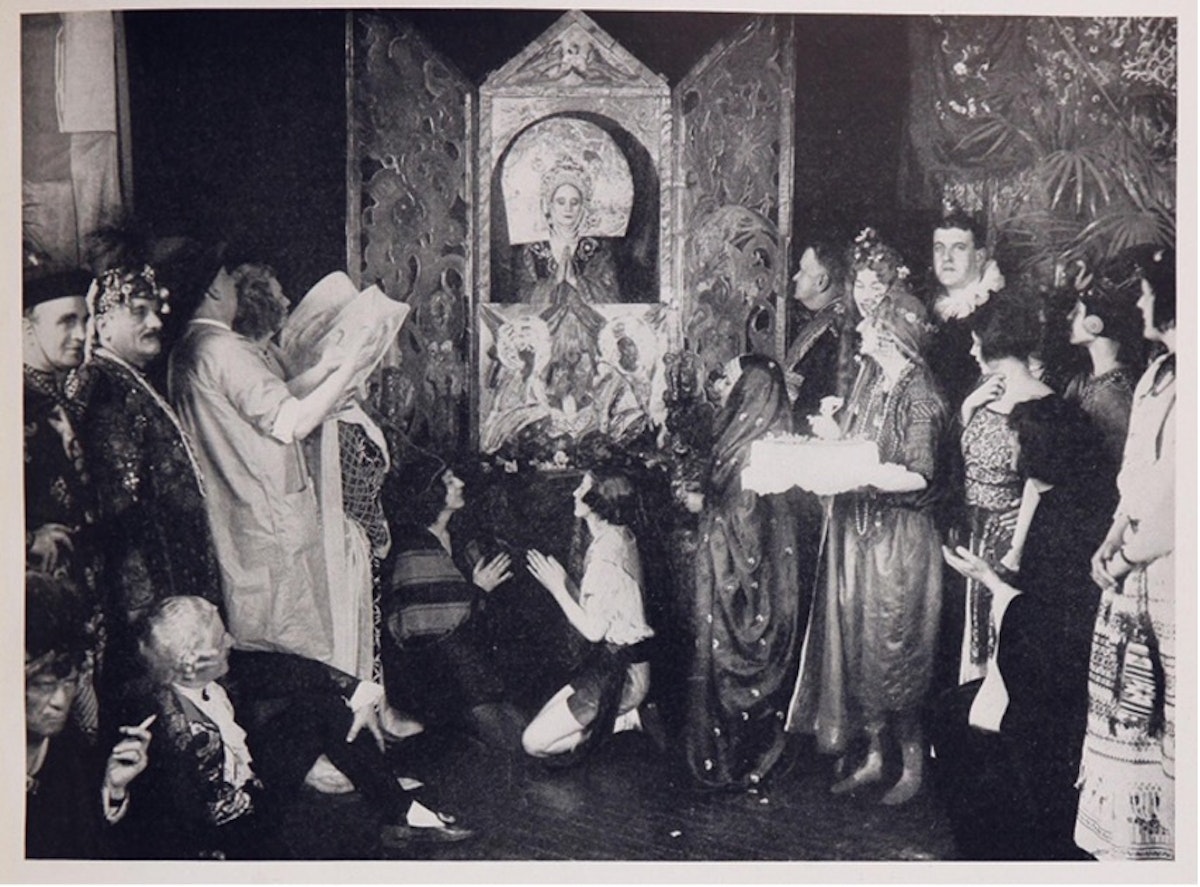
This costume made at least one additional documented appearance in the late spring of 1924 at an “Oriental Pageant” held at Steffen Court, the New York City studio of sculptor Malvina Cornell Hoffman (1885–1996). Malvina was a great friend of the Rosens, known for her life-size bronze figures, portraits, and dance sculptures.


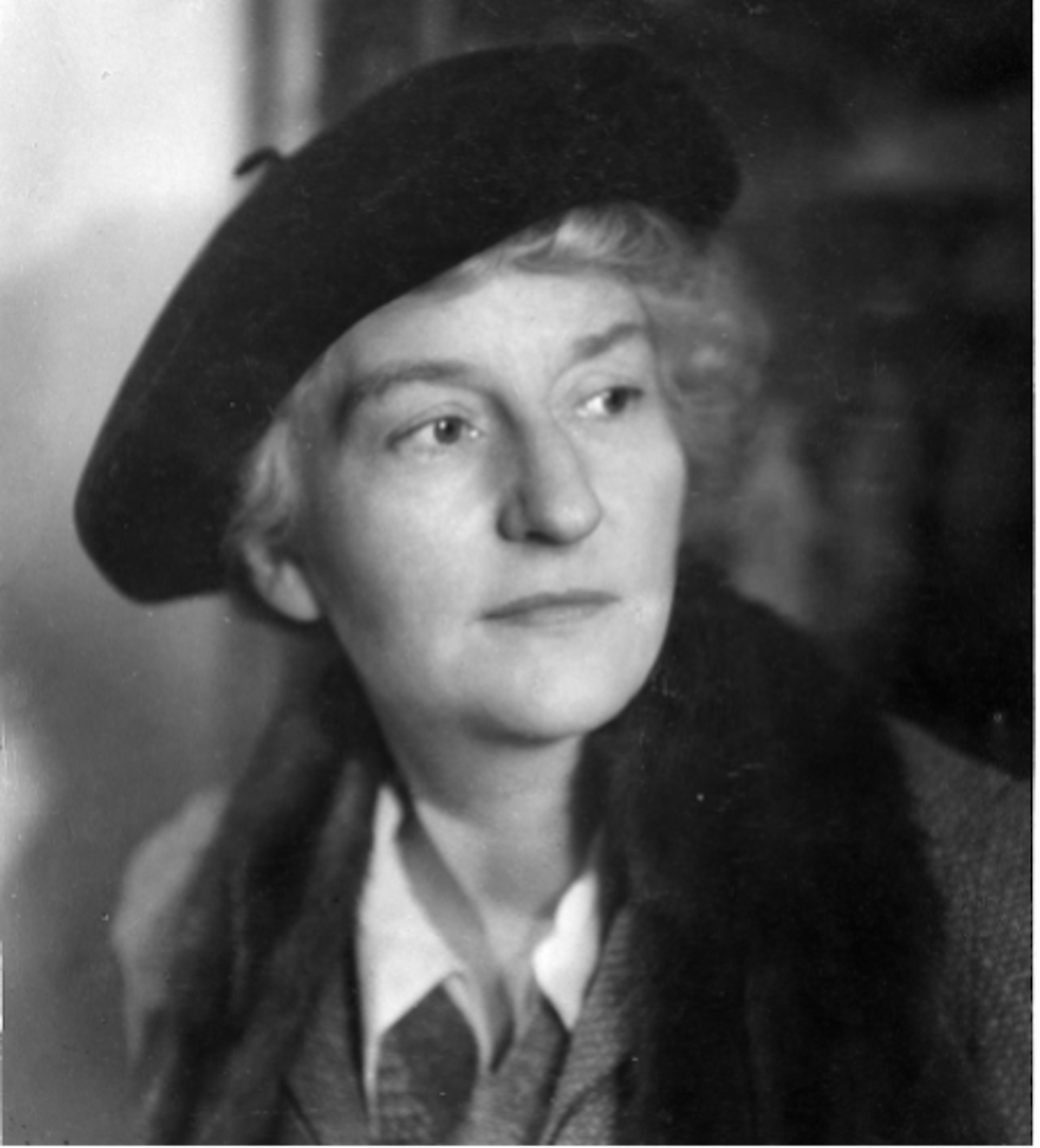
Malvina was born in New York City to concert pianist and composer, Richard Hoffman, and socially-prominent pianist Fidelia Marshall (Lamson) Hoffman. Malvina was raised in an environment of music and art, home-schooled until the age of 10. She attended Veltin School for Girls, Chapin, and Brearley private schools. Hoffman developed her artistic talents from a young age: she studied with John W. Alexander and Harper Pennington, noted painters, and Herbert Adams and Gutzon Borglum, well-known sculptors, and immersed herself in painting and sculpture classes at the Woman's School for Applied Design, the Art Students League of New York, and the Veltin Studio.
Her marble portrait bust of her father was included in the 1910 exhibition at the National Academy of Design. Her bust of English violinist and family friend (and future husband), Samuel Bonarius Grimson (1879–1955), was awarded an honorable mention at the Paris Salon that same year.
She traveled to Europe with her mother in 1910, settling in Paris in order to study with Auguste Rodin. She also worked as a studio assistant to American sculptor Janet Scudder and studied with Italian sculptor Emanuele de Rosales.
Her first dance sculpture, Russian Dancers (1911) was exhibited that year at the National Academy and the following year at the Paris Salon, where it won first prize. Malvina was inspired by a performance of Alexander Glazunov’s “Autumn Bacchanale” by Anna Pavlova and Mikhail Mordkin that she attended with her mother in London. (In her diaries, Lucie also describes being enthralled by a performance of this ballet in London in April 1910.)
Through much of her career, Malvina divided her time between New York City and Paris. She studied marble cutting and bronze casting techniques, eventually becoming a master founder. An over life-sized version of Bacchanale Russe (1912) was the first sculpture by a woman artist installed in Paris’ Luxembourg Gardens in 1918.
Malvina was active in the Red Cross during World Wars I and II, helped establish a charity for starving French artists, created posters for Serbian war relief, and produced a series of over 100 bronzes entitled “Hall of the Races of Mankind” for Chicago’s Field Museum in the early 1930s.
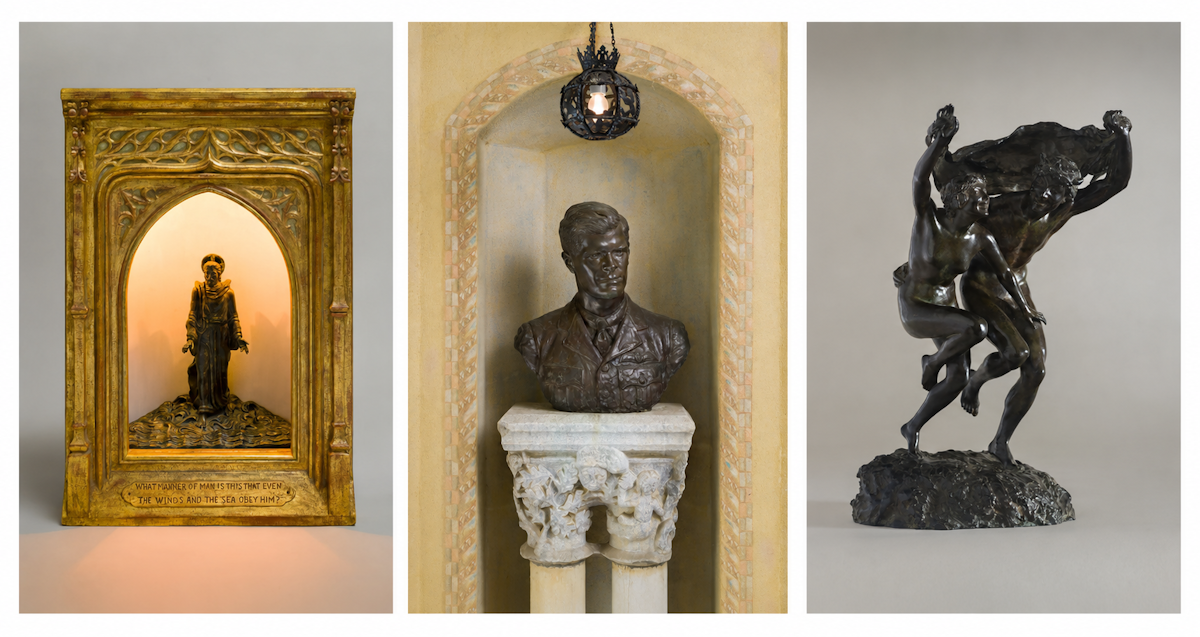
Lucie and Walter Rosen turned to Malvina in times of great emotion, as evidenced by her portrait busts of young Walter and, later, his father. Her works comprise the largest concentration of sculpture by a single artist in the Rosens’ collection. Today you can view Hoffman’s works at Caramoor and at St. Matthew’s Churchyard in Katonah.

During your next visit to Caramoor (Inside Lucie’s Wardrobe runs through September 5), take a moment to reflect on Malvina Hoffman’s artistic legacy and her enduring friendship with the Rosens.