
Lucie Rosen’s Favorite Designer
by Jessa Krick, Rosen House Director of Interpretation, Collection, and Archives
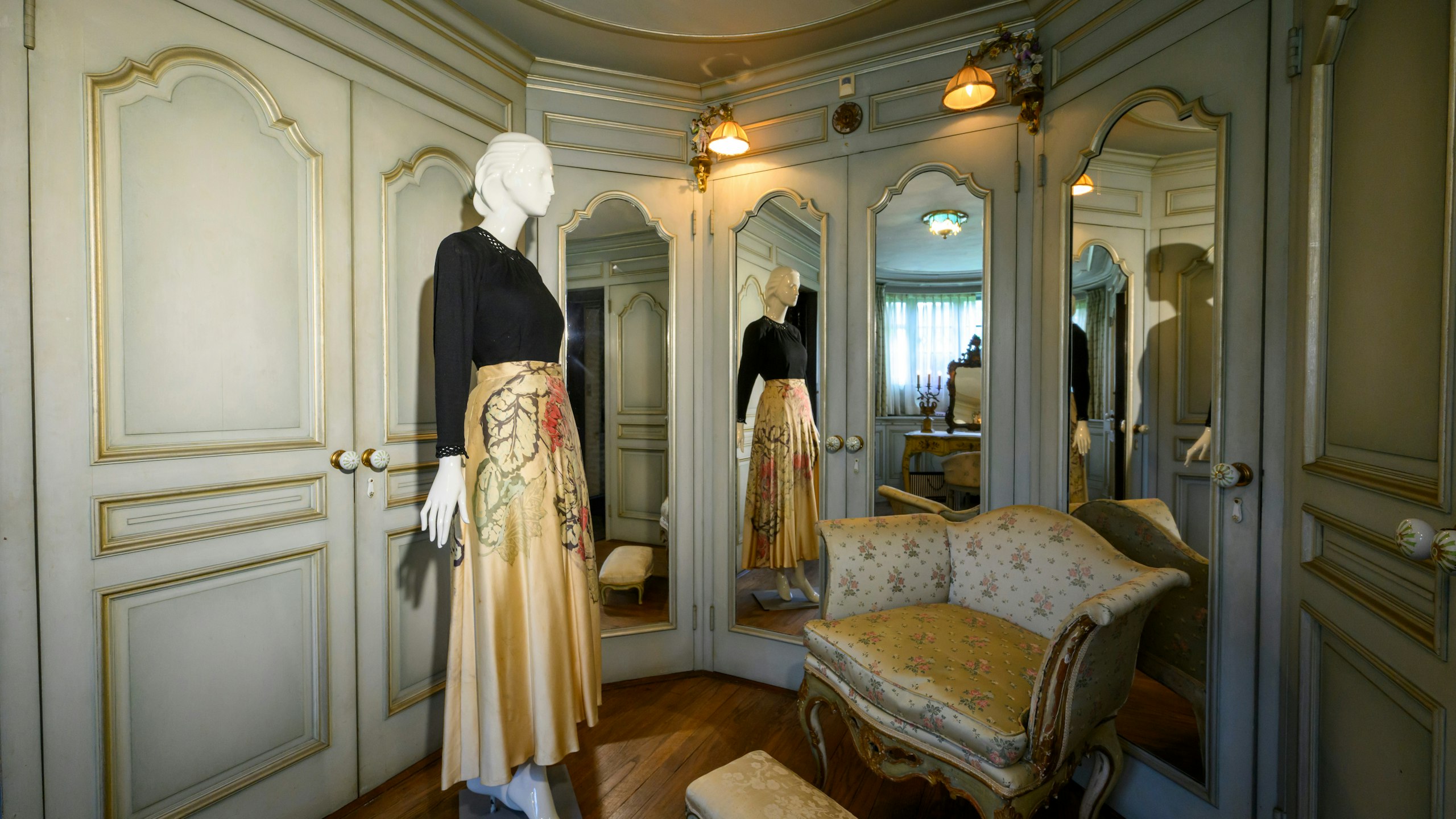
This summer, visitors to the full Inside Lucie’s Wardrobe Focus Tour have a chance to see a remarkable garment in Lucie Rosen’s Dressing Room. Made from a custom panel of batik-on-silk- satin, the full skirt shows a design of leaves and blossoms with a clever use of negative space. While Ethel Wallace is very likely the textile artist (a story for another post!), the skirt’s designer has cleverly placed the pattern off-center, spilling from right hip to left hem.
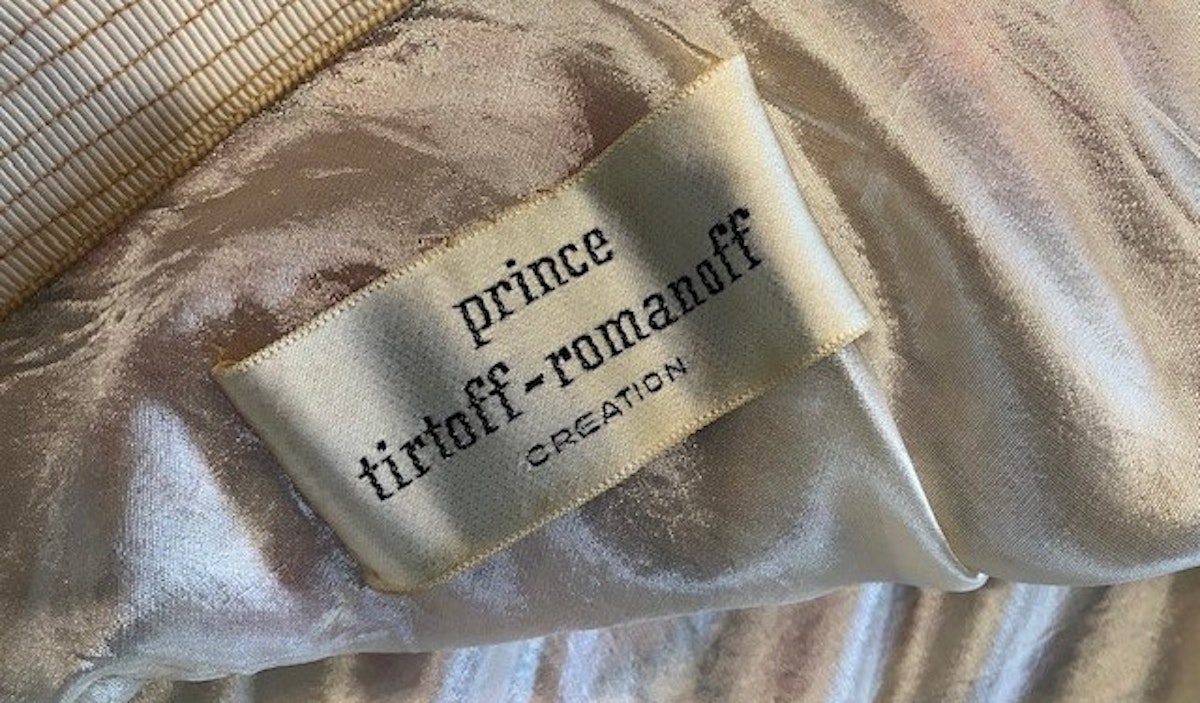
The label in this garment, “A Prince Tirtoff-Romanoff Creation,” offered a key to identifying Lucie Rosen’s favorite dress designer, a man who used two different names during his professional career.

Starting in 1925, Lucie’s datebooks in the Rosen House archive show many fittings with Alan Kramer. In some weeks, Lucie had two or three fittings at Kramer’s atelier at 30 West 51st Street, located just a short walk from the Rosens’ Manhattan townhouse. Alan Kramer designed the evening gown “of apricot satin faced with cloth of gold” that Lucie wore in American Vogue in 1926 in a photograph by Edward Steichen. Clearly, Kramer was a known New York designer at that time, although the trail of documentation had been obscured in the intervening century.
In the late 1930s, another name —“Tirtoff”— began to appear in Lucie’s datebooks, first socially, and, later, also professionally: “Fitting Tirtoff.” The skirt in Lucie’s Dressing Room was created by the mysterious Prince Tirtoff. Did she switch designers? After some determined sleuthing (and with an assist from a fellow researcher and friend), an article in the November 1938 edition of Town and Country proved Alan Kramer and Prince Tirtoff were the same person.
Born in 1893 in Appleton, Wisconsin, Alvin Kramer came to New York City probably in the late 1910s and renamed himself Alan, working his way toward becoming a designer of custom attire, including costumes, evening wear, and day dresses. He found success under this modified name and, by the time Lucie knew him, employed two seamstresses in his custom atelier (although he could also run a sewing machine himself).
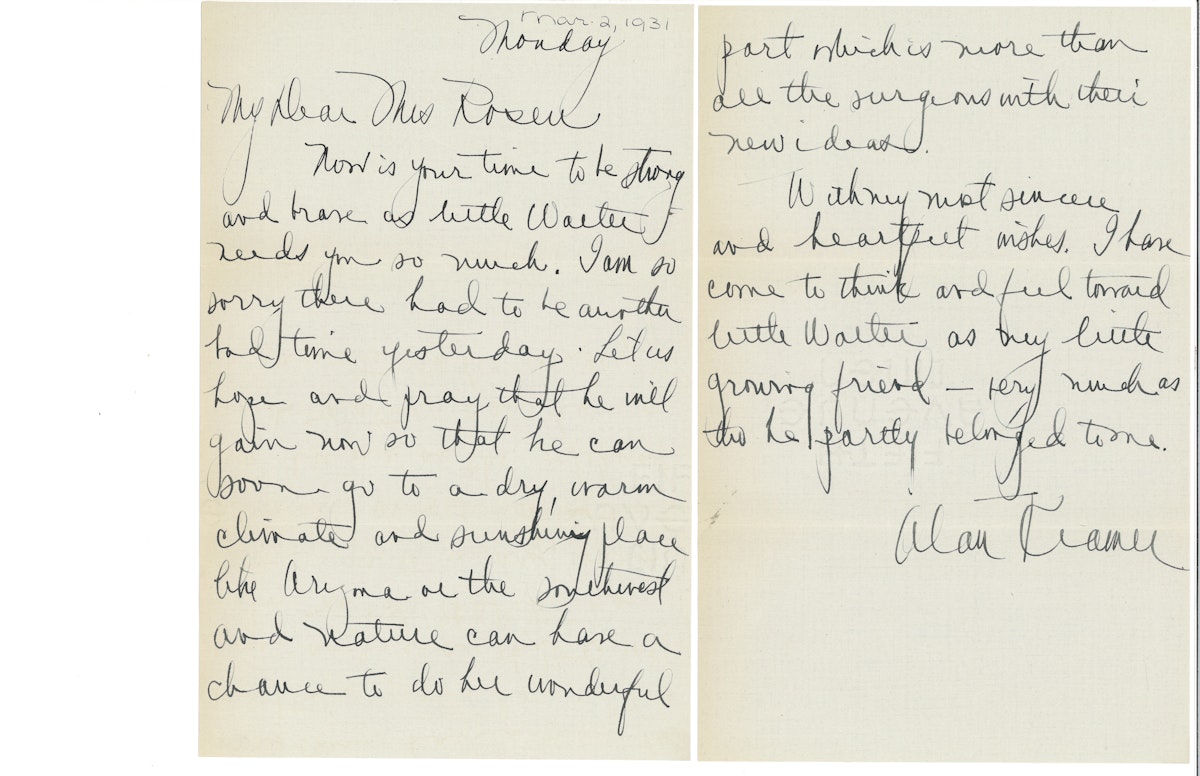
For reasons that are still not entirely clear in the late 1930s, Alan Kramer and his wife, Stephanie Kovak, a former dancer turned ballet teacher, adopted the titles Prince Vladimir and Princess Stephanya Tirtoff-Romanoff. Was it professional ambition, artistic license, legal reasons, or simply aspirations to a more regal lifestyle? Regardless, Lucie Rosen knew Alan and Stephanie by both names and used both in her datebooks. Several letters from Kramer to Lucie show the depth of their friendship, such as his concern for young Walter Rosen as the teenager recovered from illness.
Stephanie Barbé Hammer, Alan Kramer’s granddaughter, confirmed the identification. She visited the Rosen House for the opening of the Focus Tour and shared much information about her grandfather, whom she and the family—and the seamstresses—called Boss. “He loved a trailing sleeve,” she told Jessa Krick and a small gathering of docents during her visit, “and a train. And a feather fan.” Lucie clearly shared his preferences. Many of the surviving garments included in the Focus Tour have these features and are displayed, together with a representative sample of her many feather fans.
This summer marks the first time that Alan Kramer—or should we say Prince Tirtoff?—has been credited as a significant contributor to Lucie Rosen’s distinctive personal style.

Discover more about Lucie’s wardrobe by attending the Inside Lucie’s Wardrobe docent-led Focus Tour. The garments will be on view through September 5, 2026.