Cooper Hewitt, Smithsonian Design Museum | Rosen House Connections
By Roslyn Wertheimer
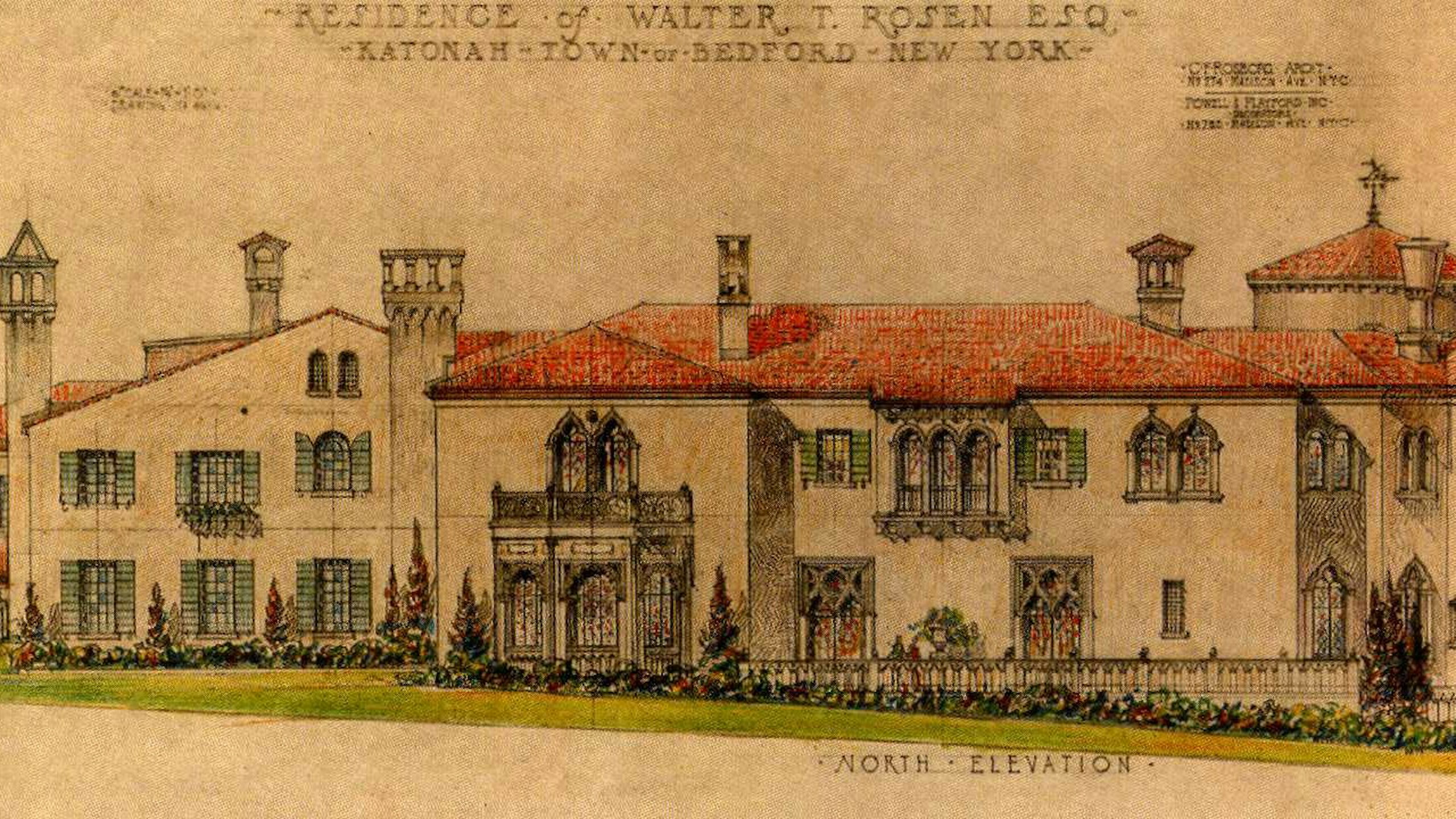
Many visitors to Caramoor are surprised to find a Mediterranean-style villa in northern Westchester County. The warm yellow stucco, red tile roofs, and irregular chimneys of the Rosen House, together with the design of the house with a central courtyard, give the site real character. The architecture brings to mind Spanish colonial architecture in California or an Italian villa on the Amalfi coast.
The architect Christian Francis Rosborg (1881–1953) designed two iterations of a house at Caramoor for the Rosens, one that was never built (shown below) and the Farm Group that he later remodeled to create the house we know today.
Rosborg was a bit of an enigma. There is little detail of his biography known, other than his early training under Ernest Flagg in New York City. A few examples of Rosborg's professional work survive the collection of the Cooper Hewitt Smithsonian Design Museum, including one for a 1905 firehouse in New York City, one for the American Pavilion at the 1939 World's Fair, and a 1940 design for the John David Department Store in Manhattan that shows the architect working in the International Style. This building was completed, although it is no longer standing.
While few of the architect's designs came to fruition, these examples— and his Caramoor work too—display Rosborg's familiarity with a wide range of styles.