


Visit Us
Craft your experience to make the most of your visit.
Spanish Courtyard
Tickets from $50
On-Site Dining
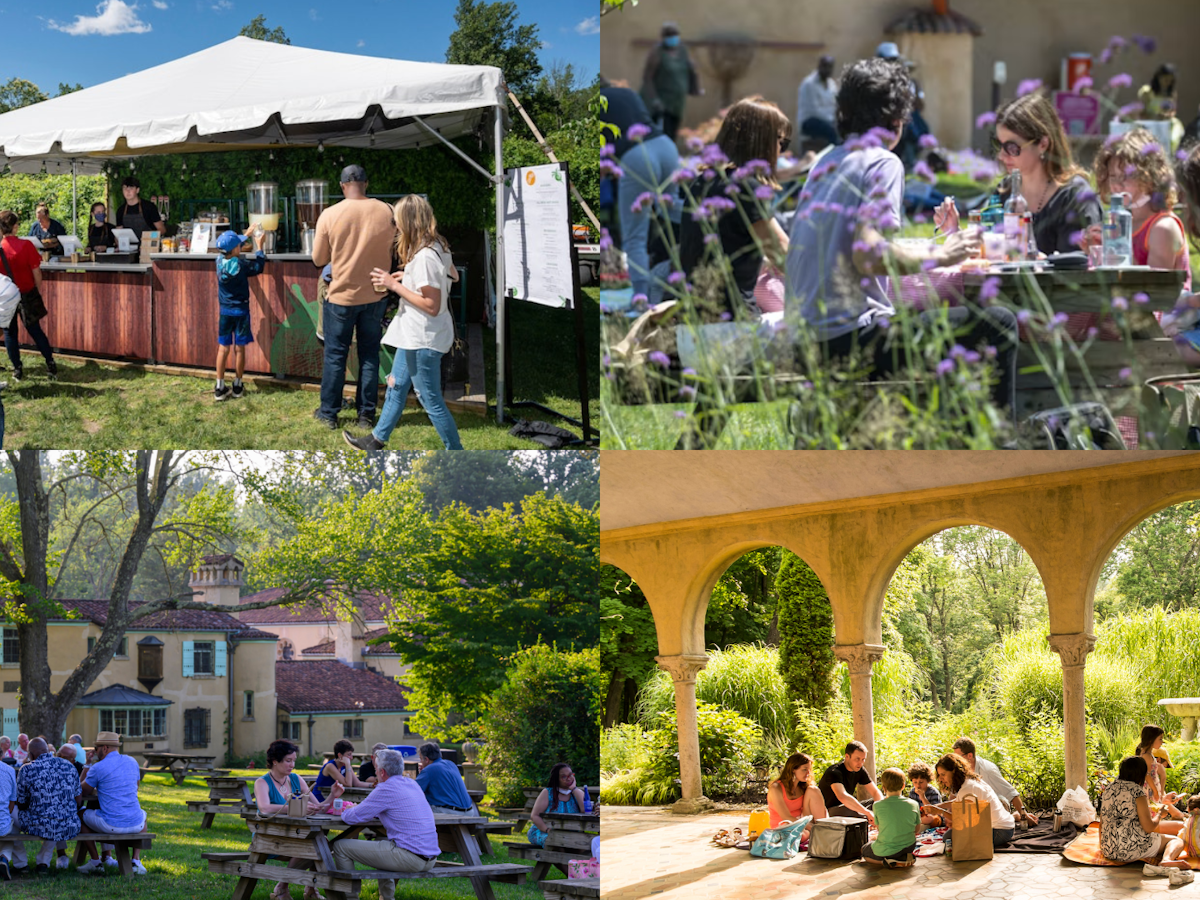
The featured vendors at this concert are:
Bravo Bar / Stop by the Bravo Bar to grab some cool drinks on a hot summer day – lemonade and iced tea, wine, cocktails and buzz-free beverages will be on ice waiting for you. Pick up curated sandwiches, sweet and savory snacks, and of course ice cream, to help round out your picnic.
Want to skip the line and dive straight into the music? You can pre-order gourmet sandwich and meal boxes up to 4 days in advance of the concert. Choose your Pre-Order Picnic during the checkout process and your picnic will be waiting for you at the concert! Click here to view the picnic menu.
Bring Your Own / We invite you to spread a blanket out on the lawn, or use our picnic and patio tables to enjoy your own culinary delights.
Spanish Courtyard
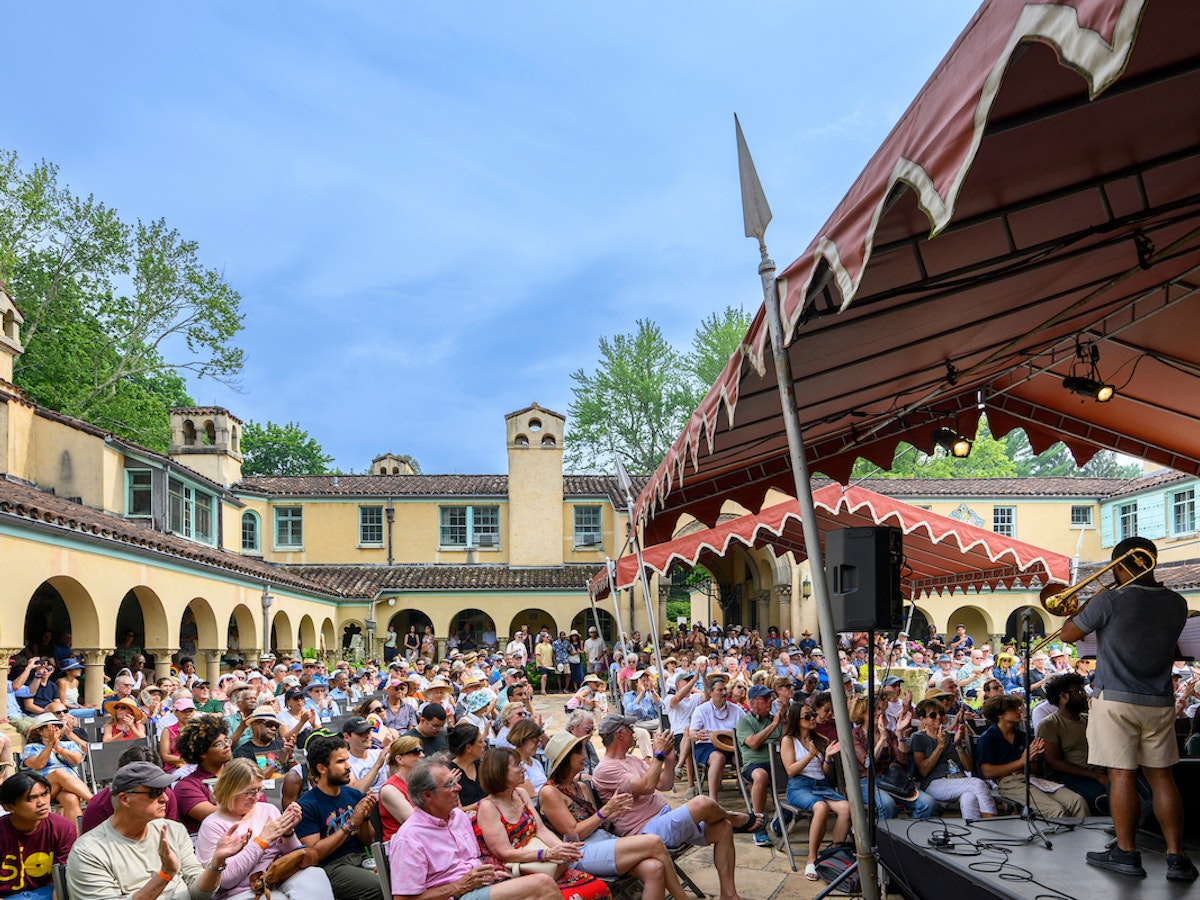
This intimate, partially covered space occupies the center of the historic Rosen House. Here you will feel transported to a Mediterranean villa and enjoy viewing the night sky during evening performances. Only covered beverages are allowed within.
Click to view all upcoming Spanish Courtyard concerts.
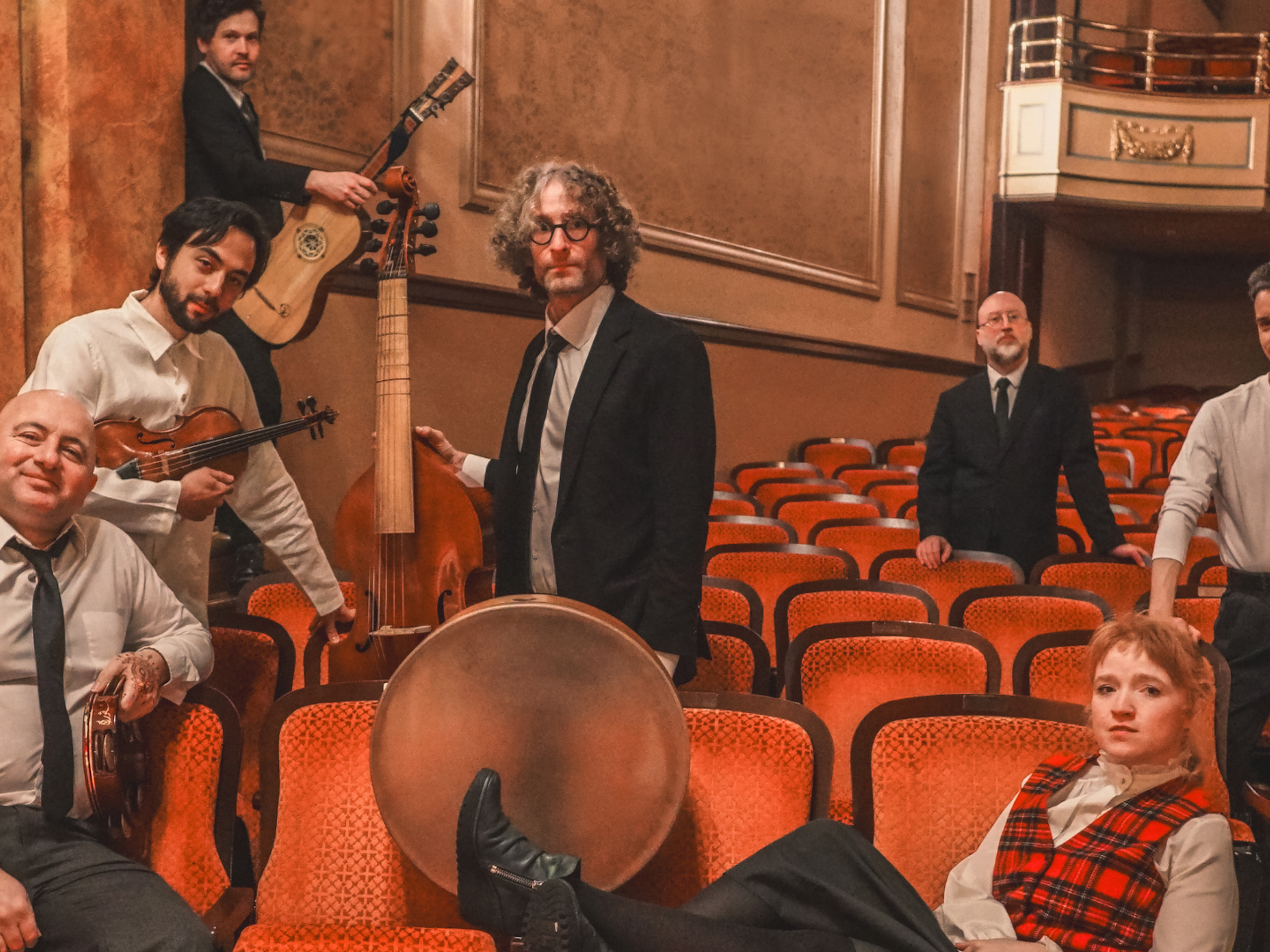
Ruckus and violinist Keir GoGwilt celebrate the legacy of Niel Gow (b. Perthshire, 1727-1807), one of Scotland’s most important musicians, in this dynamic folk-Baroque feast of Scottish dance music. Weaving together these jubilant, hard-driving and nostalgic tunes into large-scale dramatic forms, Ruckus and GoGwilt bring the 18th-century tradition of blending folk and art music to the present day.
Doug Balliett, bass & viola da gamba
Rami El-Aasser, percussion
Elliot Figg, harpsichord & synthesizer
Fiona Gillespie, voice & penny whistle
Keir GoGwilt, violin
Paul Holmes Morton, theorbo and guitar
Clay Zeller-Townson, baroque bassoon & spoons
THE EDINBURGH ROLLICK
Music from the Neal Gow Collections
The Broome Set
Charannald’s Set
Jenny Sutton’s Set
Robie Dona Gorach
Celeste Oram’s A Tuning Tune (2023)
Loch Earn Set
Lament Set
Lord Gregory
Marquis Gigg Set
Lady Helenora’s Set
Read the Program Notes
Rain or Shine Policy: All events at Caramoor take place rain or shine. In the event of inclement weather, this performance will move indoors or under a covered space.
This concert is an assemblage of airs, songs, and dance tunes drawn from collections published under the name of Niel Gow—a Perthshire-born Scottish fiddler who lived from 1727-1807. Gow’s fiddle-playing was widely respected and earned him the patronage of the Duke of Atholl. At the time it was rare for a folk musician to make a living from playing (though Gow was originally trained as a weaver); most Scottish musicians such as the dancing master James Oswald turned to classical music publishing to pursue professional careers. Gow’s reputation as a genius fiddler was noted by several writers including Robert Burns. His reputation as an authentic Scottish musician gave his name a certain cache amongst English, French, and German audiences captivated by literary depictions of an ancient Celtic world, popularized in James MacPherson’s purported collections and translations of epic poetry by the Gaelic bard, Ossian. Niel Gow’s son, Nathaniel, understood and capitalized on this Romantic, European image of Scottish otherness—it was Nathaniel Gow who in fact assembled and published the Niel Gow collections in Edinburgh around the turn of the 19th century, deliberately blurring the lines between ancient and contemporary tunes.
This Romantic imagination for Scottish folklore also had the effect of marking Scottish music as primarily “folk”—a categorical distinction foreign to the hybrid variations of Scottish and Italianate classical music played out in the 18th-century dance hall. The Gow collections include a continuo bass line and classical instruments like the harpsichord and cello. And the fact that the tunes were notated indicates their use for a musically literate audience, even as audiences for the music encompassed a range of social classes. These collections represent the canonization, monetization, and professionalization of folk music through print culture. They preserve a snapshot of an already centuries-long process of musical hybridity and exchange.
It is possible to trace the transformation of certain tunes in the collection across printed and recorded sources. For example, “The Broom of Coudenknowes,” which appears in Nathaniel Gow’s collection, The Vocal Melodies of Scotland (1816), also appears in John Playford’s dance manual of 1650, simply called “Broome.” The tune appears again in Richard Brome’s comic opera, The Northern Lasse (1632), in the Italian violinist Francesco Geminiani’s arrangements of Scottish melodies (1749), and in a recording by Silly Wizard (1978). Another song in the 1816 collection, “Lord Gregory,” also known as “The Lass of Roch Royal” or “The Lass of Augrim,” appears in many recordings including one by Peggy Seeger. The song portrays the anonymous lass as the ill-fated mother of Gregory’s illegitimate child. In the instrumental version provided in the Gow collection, only the basic meter and contours of the melody remain. Contemporary recordings of “Galla Water” such as the one by Old Blind Dogs (1992) more closely resemble the melody written down in the Gow collection. However, certain notated ornaments, counterpoints, and expressive markings in the printed version of “Galla Water” reveal the editorial preferences of Nathaniel Gow, who perhaps felt the need to legitimate the songs to an audience accustomed to reading classical music.
It is harder to track down recorded versions of the instrumental jigs, reels, strathspeys, and airs. “Lady Charlotte Murray’s Jig” has a number of different names and has been recorded by contemporary folk musicians including the Chieftans (“O’Mahoney’s Frolics,” 1989) and Martin Hayes and Dennis Cahill (“The Cat in the Corner,” 1997). Jordi Savall’s two-volume release, The Celtic Viol (2009, 2010), includes selections from Nathaniel Gow’s collections, perhaps conjuring the mythologized Scottish past through the viol’s unique timbres and tunings. Laura Risk’s recent performances of “Niel Gow’s Lament” also bridges baroque conventions, ethnographic and archival knowledge, and a living practice of Scottish and Québécois fiddling. These examples attest to the ways in which the Gow collections continue to keep alive a vibrant hybridity between folk, popular, and baroque music-making.
Given that Ruckus is a baroque continuo band, some of the 18th-century Italianate influences visible in Gow’s collections are baked into our sound: gut strings, short bows, and instruments like the harpsichord, baroque bassoon, and viola da gamba. Rather than accepting the notated versions in Gow’s collection as authoritative texts, we play these melodies with an ear to their cumulative historical and contemporary soundings, and we have performed these tunes in both concert and dance hall settings. Precisely because these books played a significant role in the selective canonization of Scottish folk music, it has been a gratifying journey to work our way through and beyond these texts, and to find a sound unique to our own hybrid paths through these musical traditions.
Ruckus is a shapeshifting, collaborative baroque ensemble with a visceral and playful approach to early music. Described as “the world’s only period-instrument rock band” (San Francisco Classical Voice), Ruckus’ core is a continuo group, the baroque equivalent of a jazz rhythm section: guitars, keyboards, cello, bassoon and bass. The NYC-based ensemble aims to fuse the early-music movement’s questing, creative spirit with the grit, groove and jangle of American roots music, creating a unique sound of “rough-edged intensity” (New Yorker) that’s “achingly delicate one moment, incisive and punchy the next” (New York Times). The group’s members are among the most creative and virtuosic performers in North American early music.
Ruckus is the house band for Hudson Hall’s baroque opera productions, directed by R.B. Schlather. The New York Times’ Zachary Woolfe wrote: “Ruckus aptly describes itself as a band: it’s that tight, and that wild.” Ruckus’ next production at Hudson Hall will be Handel’s final opera, Deidamia. In spring 2025, the band released The Edinburgh Rollick (featuring violinist Keir GoGwilt) bringing new life to the tunes of Neil Gow, one of Scotland’s most important 18th-century composers. Praised as “a perfect meeting of folk repertoire and ancient instruments “ (Le Canard Folk), it will come to NYC in January 2026 at Music Before 1800.
Ruckus’ debut album, Fly the Coop, a collaboration with flutist Emi Ferguson, was Billboard’s #2 Classical album upon its release. Performances of Fly the Coop have been described as “a fizzing, daring display of personality and imagination” (New York Times). The Boston Musical Intelligencer describes the group as taking continuo playing to “not simply a new level, but a revelatory new dimension of dynamism altogether… an eruption of pure, pulsing hoedown joy.”
Ruckus joins Davóne Tines in a collaboration entitled “What is Your Hand in This?” The program, marking the 250th anniversary of the Declaration of Independence, asks: How can we passionately address wrongs while coexisting as a people? Can we find compassion for others? Can we find compassion for ourselves? The repertoire spans early American hymnody, Handel's Messiah, Benjamin Carr's Federal Overture, abolition-era songs, mid-20th century protest songs, and features commissions from Carnegie Hall and Hudson Hall. It will make its New York premiere at Carnegie Hall in January 2026.
Keir GoGwilt is a violinist and composer who was born in Edinburgh and grew up in New York City. His work combines his historical & musicological research with collaborative experimentation. As a violinist he has been described as a "formidable performer" (New York Times) with an "evocative sound" (London Jazz News) and "finger-busting virtuosity" (San Diego Union Tribune). In past seasons he has soloed with groups including the Sinfonieorchester Basel, Orchestra of St. Luke's, Philharmonia Baroque Orchestra, Chinese National Symphony, Orquesta Filarmonica de Santiago, the Boston Modern Orchestra Project, and the La Jolla Symphony. A founding member of the American Modern Opera Company (AMOC), he has composed and performed original, collaboratively-devised music, dance, and theater works at 92NY, Baryshnikov Arts Center, Luminato Festival, PS 122 COIL, Stanford Live, American Repertory Theater, Carolina Performing Arts, Momentary, Monday Evening Concerts, and the Ojai Music Festival.
This year he released "The Edinburgh Rollick," with Ruckus Early Music, featuring Scottish fiddle music from the Niel Gow collections. The album has been noted for its "dynamic, improvisatory spirit" (The Strad), and his playing for its "deep stylistic understanding of the Scottish trad sound" (Early Music America). Other current projects include the "Zarabanda Variations": a co-authored collection of songs and dances reflecting Baroque histories and futurisms of New Spain, including performances this season at the Peabody Essex Museum and Lincoln Center. As composer-in-residence with the JACK quartet he is working on a modular series of pieces exploring counterpoint and tuning called "A Treatise on Limited Freedoms," premiering at the Santa Fe Chamber Music Festival in August 2025 and the 92NY in March 2026. He is currently composing a piece for the Bergamot Quartet (playing a quartet of hardanger instruments) and harpist Jacqueline Kerrod with the support of the Barlow Endowment.
Recent past projects include creating and performing a stage role for Bobbi Jene Smith's "Marie & Pierre," with original music by Celeste Oram at Theater Basel. His duo with bassist Kyle Motl features their original compositions and has been noted for its "rhapsodic gestures" (The New Yorker) and "keen musical intellects" (The Wire). His compositions with violinist Johnny Chang have been praised for their "patience, poise, and consummate balance" (Night After Night) and "mystical ecstasy" (Esoteros). He has worked closely with musicians including Matthew Aucoin, Carolyn Chen, Tan Dun, Mark Dresser, Malcolm Goldstein, George Lewis, Tobias Picker, Eyvind Kang, Jessika Kenney, Celeste Oram, Steve Schick, Caroline Shaw and Wilfrido Terrazas, appearing on records put out by Another Timbre, Tzadik, Clean Feed, 577 Records, and BMOP.
GoGwilt earned his PhD in Music from UC San Diego in 2022, where he was advised by Amy Cimini and Anthony Burr, and was awarded the Chancellor's Dissertation Medal for the Division of Arts & Humanities. His research on histories and philosophies of performance, pedagogy, and embodiment has been published in the Bach Journal, Current Musicology, Naxos Musicology, and the Orpheus Institute Series.
Craft your experience to make the most of your visit.
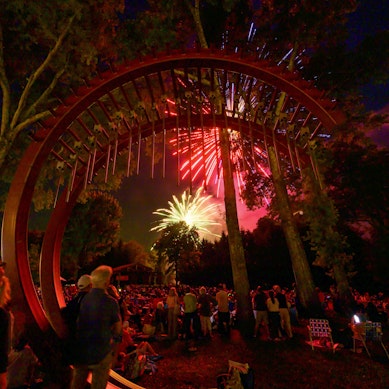
Your support brings performances to life, preserves Caramoor’s historic legacy, and nurtures the artists of tomorrow. Every gift matters—and makes you part of the Caramoor family.
